
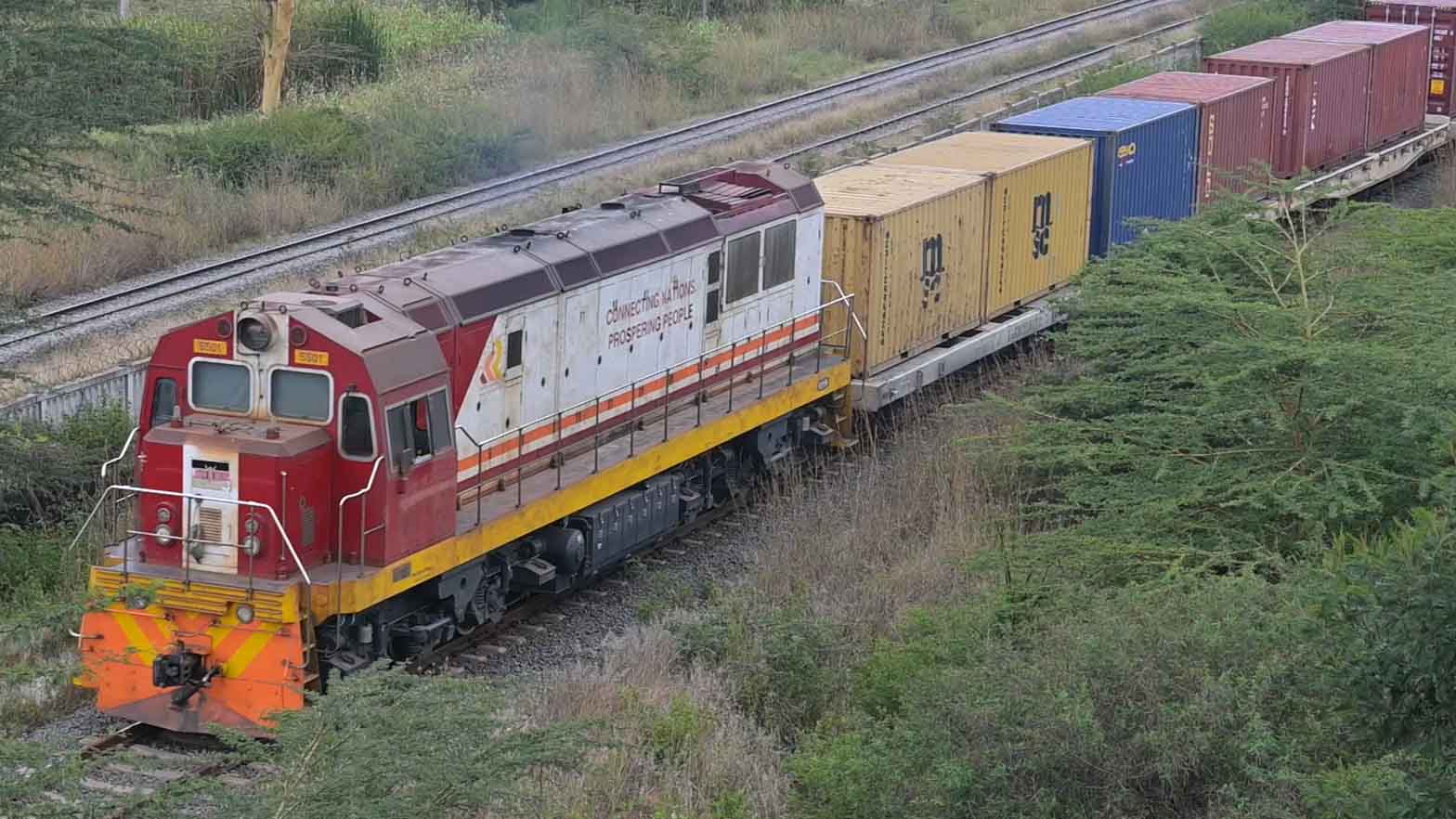
When considering logistics in East Africa, the role of railways in transporting cargo from ports to inland areas cannot be overlooked. In Kenya and Tanzania, the development of the Standard Gauge Railway (SGR) is progressing alongside the existing Meter Gauge Railway (MGR). The SGR has a track gauge of 1,435 mm, the same gauge used by Japan’s Shinkansen. In contrast, the MGR has a track gauge of 1,000 mm, meaning the two systems use different gauges. However, even where track gauges are the same, this does not necessarily mean that rolling stock or operating systems are compatible. The SGR systems in the two countries differ in terms of electrification, financing, and the regions they connect. How will transport within East Africa change as these railway networks are extended?
Tanzania Aims to Revitalise Rail Transport
In Tanzania, a new SGR is being developed in parallel with the rehabilitation of the existing MGR. Although the MGR has been in use for many years, ageing tracks and rolling stock, among other factors, have prevented it from fully utilising its designed transport capacity. According to the World Bank, freight volumes on the existing rail network declined as cargo shifted to roads, with approximately 420,000 tonnes transported on the MGR and approximately 320,000 tonnes on the TAZARA railway in the 2021/22 financial year. Against this background, rehabilitation of MGR tracks and bridges and improvements to operational safety are being carried out.
The new SGR is electrified. Freight transport between Dar es Salaam and Dodoma began in July 2025, and in February 2026, container trains also began operating to Ihumwa ICD (Inland Container Depot) in Dodoma. Tanzania’s inland logistics infrastructure is not limited to the port side. The Kwala Dry Port, approximately 80 km from Dar es Salaam, opened in 2025 and is operated in conjunction with SGR freight services. Ihumwa has begun receiving containers, while development and preparations for operations are also progressing at the ICD in Morogoro.
An ICD (Inland Container Depot) is a container-handling facility located inland, away from a port. It functions as a logistics hub for the receipt, delivery and storage of containers, as well as customs clearance, and is expected to help ease port congestion and improve the efficiency of inland transport.
Furthermore, work is under way at the Port of Dar es Salaam to extend the SGR into the port area, with operations scheduled to begin in 2027. This is expected to facilitate smoother cargo transfers from the port to rail, improve the efficiency of inland transportation, and reduce the burden on truck transport around the port. Directly connecting the port and railway may also help reduce the time and cost involved in container transfers.
Going forward, extension works towards Mwanza and Kigoma are progressing, while the Tabora–Kigoma line is also linked to plans for connections towards Burundi. However, this does not yet mean that seamless transportation to neighbouring countries is possible. Practical conditions such as cross-border connections, transshipment, and customs clearance still need to be confirmed.
The Tanzania Railways Corporation (TRC), a state-owned company, is the project owner and operator of Tanzania’s SGR, while construction companies and financiers differ by section. On sections including Dar es Salaam–Makutupora and Makutupora–Isaka, construction is being undertaken by Türkiye’s Yapı Merkezi, while Portugal’s Mota-Engil Africa was also jointly involved in the initial sections. Meanwhile, the construction contract for the Tabora–Kigoma section is being undertaken by a consortium of China Civil Engineering Construction Corporation (CCECC) and China Railway Construction Corporation (CRCC). In terms of financing, in addition to support from the Development Bank of Southern Africa and the African Development Bank Group, Standard Chartered arranged a syndicated financing package of more than US$2.33 billion in 2026 for Lots 3 and 4, involving export credit agencies and other parties. Even for sections constructed by Turkish companies, the source of financing is not necessarily Turkish. Construction, financing, and operations therefore need to be considered separately.
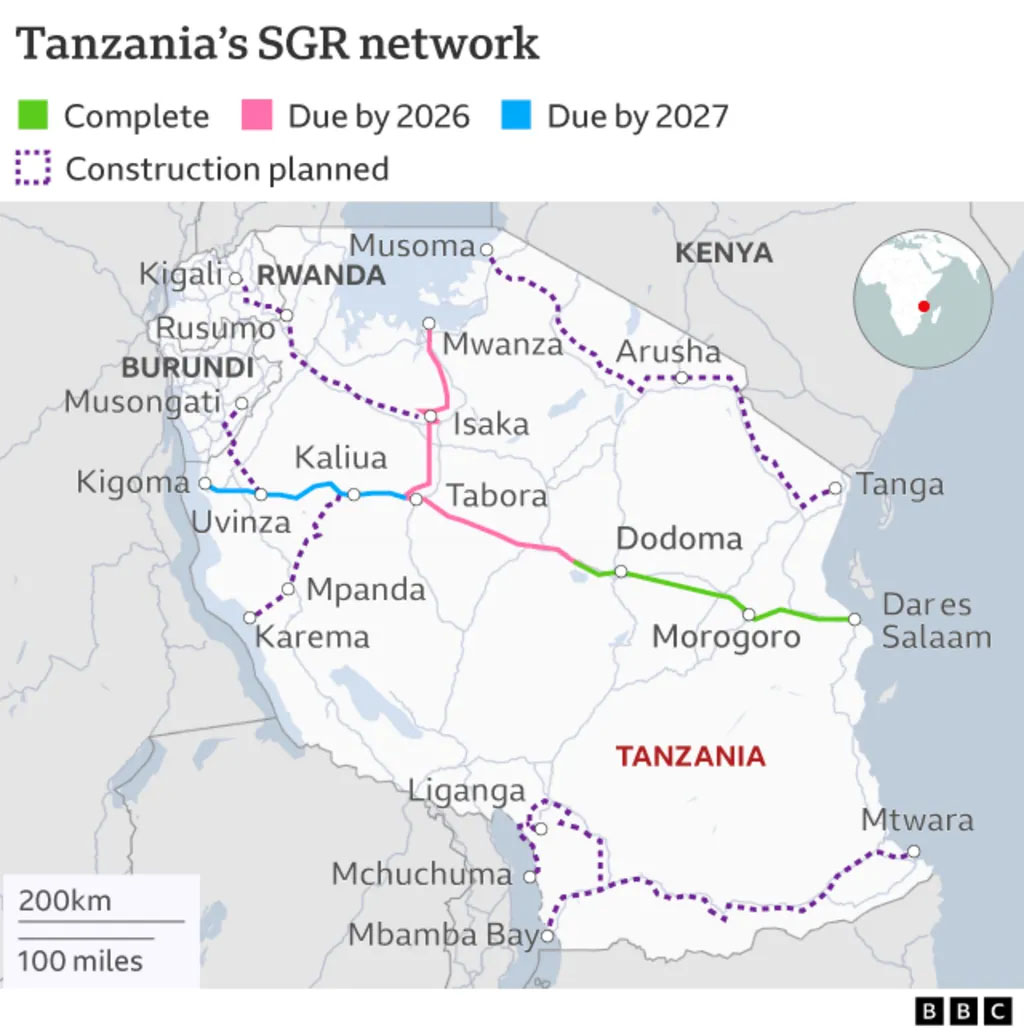
https://www.bbc.com/news/articles/c70z109nnk4o
*This route map is based on plans as of 2024. The scheduled completion years shown on the map may not reflect the latest plans.*
Kenya Aims to Extend Beyond Naivasha
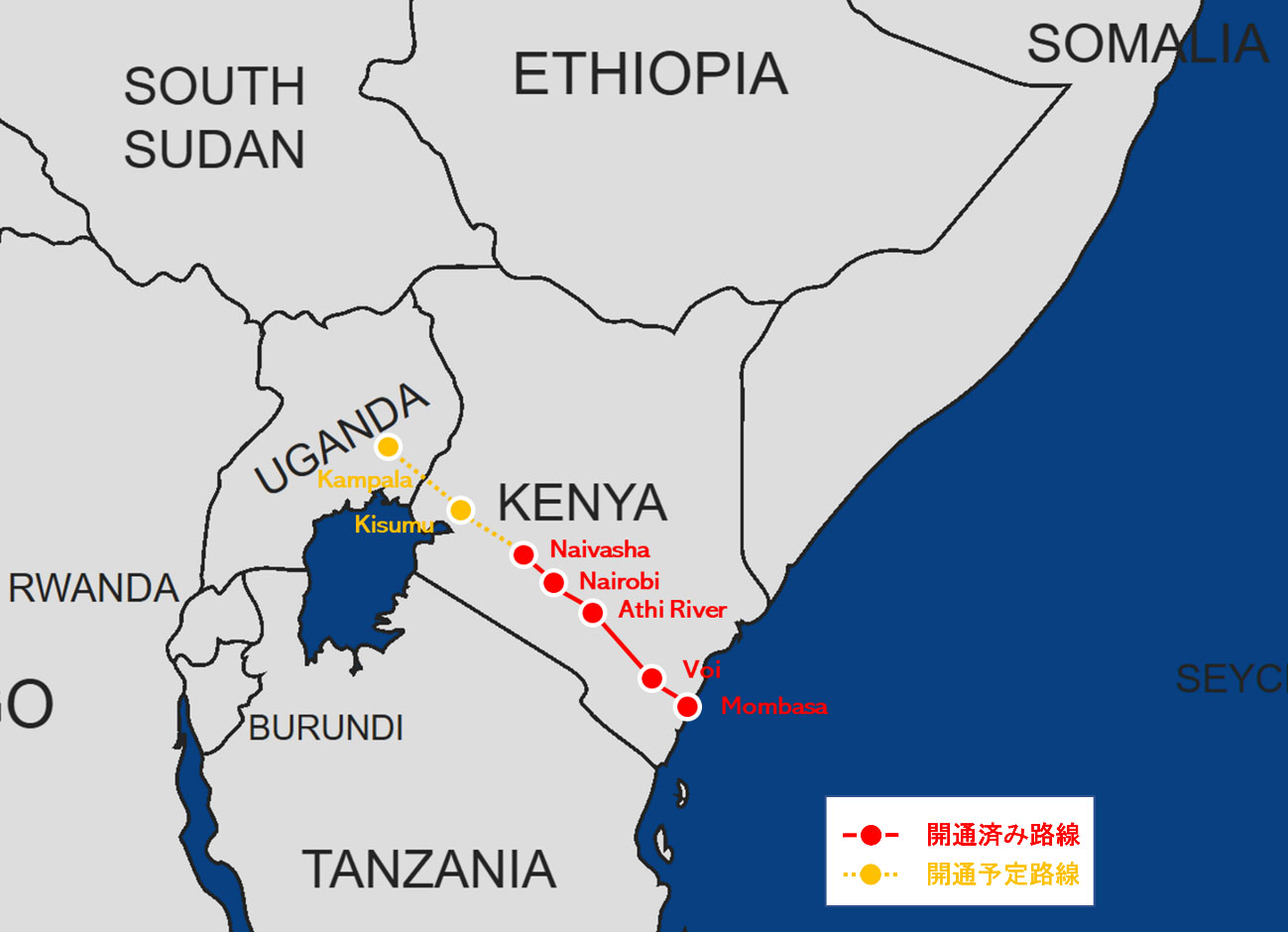
Kenya’s SGR currently operates from the Port of Mombasa through Nairobi to Naivasha. Naivasha is a city located approximately 90–100 km northwest of Nairobi, normally around 1.5–2 hours away by road. An ICD has been established in Naivasha and functions as an inland logistics hub where containers transported from the port can be received and transferred. It is also expected to serve as a logistics hub for cargo destined for inland markets such as Uganda, Rwanda, and the Democratic Republic of the Congo.
Construction of the initial sections was financed through loans from the Export-Import Bank of China together with funding from the Kenyan government, while construction was undertaken by China Road and Bridge Corporation (CRBC). Operations were initially handled by Africa Star Railway Operation Company (AfriStar), which is affiliated with CRBC, but Kenya Railways Corporation (KRC) gradually took over operations and is now the operator.
Freight volumes stood at approximately 2.9 million tonnes in 2018, when freight operations began, 6.533 million tonnes in 2023, 6.531 million tonnes in 2024, and 7.332 million tonnes in 2025 (provisional). Although volumes have fluctuated from year to year, they have increased overall since the line opened. Nairobi and Naivasha both have ICDs, allowing cargo to be transported by rail from the Port of Mombasa. Facilities connecting the SGR and MGR have also been developed in Naivasha.
The extension towards Malaba has also begun to move forward. In July 2026, physical construction work commenced on the Naivasha–Kisumu section, with an eventual plan to extend the railway network to Malaba, near the Ugandan border. Construction is being undertaken by CCCC and CRBC, with financing combining government budget allocations and overseas funding. If the extension is completed, rail transport options from the Port of Mombasa through Nairobi and Naivasha towards the Ugandan border will expand.
Not “Electric Train or Train”, but How the Networks Connect
Tanzania’s SGR is electrified, while Kenya’s SGR is operated using diesel locomotives. One reason electric trains are often considered preferable is that electric locomotives are energy-efficient and can operate without producing exhaust emissions along the railway line. Depending on how the electricity is generated, CO₂ emissions can also be reduced. On the other hand, overhead lines and substations require significant initial investment, and the environmental advantages also depend on the electricity generation mix. Tanzania’s SGR should therefore not be viewed simply as “electric trains versus trains”; rather, it is an electrified railway on which electric locomotives haul both passenger and freight trains.
Rail transport capacity is not determined solely by the performance of rolling stock or track gauge. On single-track sections in particular, trains travelling in opposite directions use the same track and therefore need to pass each other at stations or other designated locations. The number of trains that can operate is constrained by passing loops, signalling systems, and timetable arrangements. As a result, even when freight demand increases, it may not be possible simply to increase the number of trains. Increasing service frequency requires measures such as expanding passing facilities, improving signalling systems, and optimising operating plans. When assessing actual transport capacity, it is necessary to examine whether individual sections are single or double track, as well as their passing facilities, service frequency, and connections to freight terminals.
In addition, Kenya’s SGR project has continued to generate debate over its impact on the natural environment, including national parks, as well as Chinese financing and the associated debt burden. Rather than focusing only on the benefits of infrastructure development, environmental conservation, project costs, actual usage, and repayment obligations must also be considered together. At the same time, railways can offer an alternative for shifting large volumes of freight away from roads. If some truck freight is transferred to rail, it may help reduce congestion and accident risks around ports and along major roads. However, the extent to which congestion and accidents would actually decline cannot be determined without considering factors such as railway utilisation rates and road traffic volumes.
A Turning Point for Regional Transport?
If the extensions in both countries are completed, transport routes from ports to inland borders will increase, potentially reshaping the transfer of cargo between railways, roads, and ports. For example, if services are established that allow cargo arranged by shipping lines or shippers to be handed over at inland hubs such as Naivasha and transported onwards across national borders, the range of available transport options could expand.
However, simply building the railway tracks will not be enough. Cross-border connections, freight train operating slots, transshipment facilities, customs procedures, and the division of responsibilities all need to be established in practical terms. Furthermore, the overall competitiveness of logistics cannot be assessed by comparing railway freight rates from ports to inland hubs alone. Collection and delivery, terminal handling, storage, customs clearance, and the time and costs associated with each of these processes must also be taken into account.
Opening dates vary by section. For Kenya’s Naivasha–Kisumu–Malaba extension, the government had previously set a completion target of June 2027, with physical construction starting in 2026. For Tanzania, TRC is targeting completion and the start of operations on the Makutupora–Mwanza section by the end of 2028, while the Tabora–Kigoma and Uvinza–Musongati sections are scheduled for completion in 2030. These are all planning targets, and actual opening dates will depend on construction progress and cross-border connections.
The SGR is expanding in different ways in each country. If extensions and ICD development progress over the next few years, and connections between ports and railways and cargo-handling systems improve, logistics in East Africa could change significantly. At the same time, conditions beyond the infrastructure itself, including train frequency and transport capacity as well as cross-border procedures, will also influence transport efficiency. The key will be to seamlessly connect railways, ports, roads, and customs processes. As a company, we will continue to closely monitor these developments.
References | Notes
Disclaimer: The information provided in this article is for general informational purposes only and may vary depending on local regulations and operational conditions. Please contact MOL or relevant authorities for case-specific guidance.