
Ever since I started working on Africa-related projects, I occasionally find myself wondering when I first became interested in Africa.
The truth is, I certainly wasn't thinking about it when I was a student. I had no particular interest in African resources or energy issues, and I never imagined that one day I would be living and working in the UK.
Yet looking back, I think my first connection to Africa came from a rather unexpected place. The Premier League.
When I was a student watching English football every weekend, the African stars who stood out most were Didier Drogba and Emmanuel Adebayor.
Drogba, playing for Chelsea, was simply unstoppable. He had a remarkable ability to deliver in the biggest moments, earning the respect even of rival supporters.
At the time, I saw them simply as exceptional footballers.
I do not remember paying much attention to the fact that Drogba was from Côte d'Ivoire or that Adebayor was from Togo. To me, they were Premier League superstars first and foremost.
I certainly never imagined that years later I would find myself working on projects related to Africa.
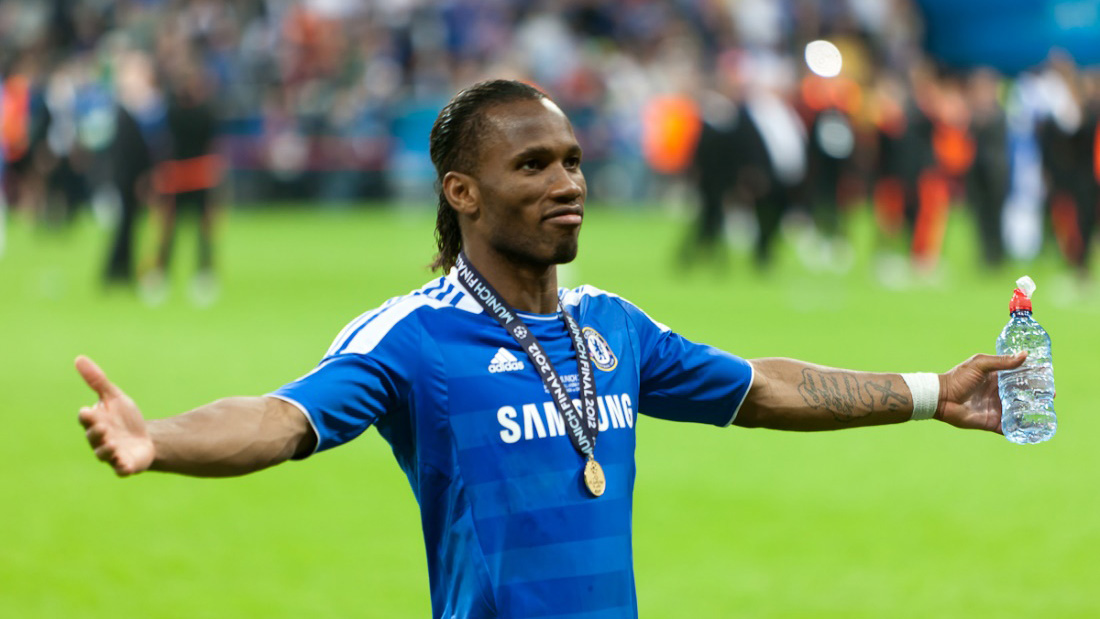
In the years that followed, many more African players emerged in the Premier League.
Looking back, they were not merely participants in the league. They helped define the league itself. Their talent, personalities, and achievements became part of what made the Premier League so compelling around the world.
The Premier League enjoys enormous popularity across many African countries, and it is hard to imagine that this happened without the contribution of African players who became household names throughout the continent and beyond.
Of course, I never thought about any of this at the time.
I was simply sitting in front of the television, thinking that strikers like Drogba were incredibly cool.
Many years have passed since then.
Today I live and work in London. My professional life now involves topics such as African logistics, infrastructure, and energy.
The conversations I have at work revolve around ports, power projects, critical minerals, and supply chains.
If my younger self had overheard these discussions, he probably would not have understood a word of them.
One of the most interesting things about living in London is how close Africa feels.
Not only through work.
People with roots across the African continent are part of everyday life here. There are countless Africa-focused events, business networks, and cultural communities. Whether you are following the news or having conversations about business and investment, Africa is never very far away.
At the same time, living here has taught me that "Africa" is far too diverse to be treated as a single entity.
Kenya, South Africa, Mozambique, Namibia, Egypt, and Nigeria each have their own economic realities, challenges, and opportunities. The more I work across the continent, the more I realize how different these countries are from one another.
Many of the simplistic assumptions I held as a student have gradually disappeared.
Thankfully, they have been replaced by a far more interesting reality.
I still enjoy watching football.
Every now and then, I watch highlights of old matches.
When I see Drogba playing, I sometimes feel a sense of irony.
At the time, I had no idea that I would one day be involved in Africa-related work.
But looking back now, I realize that my first connection with Africa was neither a port nor a power plant.
It was not a critical minerals project.
It was the Premier League.
It was watching players like Drogba and Adebayor on weekends without realizing that they came from countries that would later feature so prominently in my professional life.
If I were to draw a line connecting my student days and the work I do today, perhaps that line began there, on a football pitch, long before I ever heard terms such as energy transition, logistics corridors, or critical minerals.
Bonus: Africa's Presence in the Premier League (2026-27)
According to my own review of Premier League squads (including dual-nationality players), clubs with the highest number of players holding African nationality in the 2026-27 season are:
| Team Name | Total |
|---|---|
| Hull City | 11 |
| Brentford | 9 |
| Crystal Palace | 8 |
| Liverpool | 8 |
| Manchester United | 8 |
| Sunderland | 8 |
| Ipswich Town | 7 |
| Manchester City | 7 |
| Nottingham Forest | 7 |
| Coventry City | 6 |
| Tottenham Hotspur | 6 |
| Arsenal | 5 |
| Aston Villa | 5 |
| Brighton & Hove Albion | 5 |
| Fulham | 5 |
| Bournemouth | 4 |
| Chelsea | 4 |
| Newcastle | 4 |
| Everton | 3 |
| Leeds United | 2 |
Looking at nationality rather than club, the represented African countries are:
| Country Name | Total |
|---|---|
| Nigeria | 31 |
| Ghana | 17 |
| Cote d'Ivoire | 13 |
| DRC | 11 |
| Senegal | 9 |
| Cameroon | 6 |
| Morocco | 6 |
| Algeria | 4 |
| Guinea | 3 |
| Mali | 3 |
| Guinea Bissau | 3 |
| Gambia | 3 |
| Angola | 2 |
| Mozambique | 2 |
| Togo | 2 |
| Chad | 1 |
| Mauritania | 1 |
| Egypt | 1 |
| Central Africa | 1 |
| Siera Leone | 1 |
| Zimbabwe | 1 |
| Eritrea | 1 |
References | Notes
Disclaimer: The information provided in this article is for general informational purposes only and may vary depending on local regulations and operational conditions. Please contact MOL or relevant authorities for case-specific guidance.