
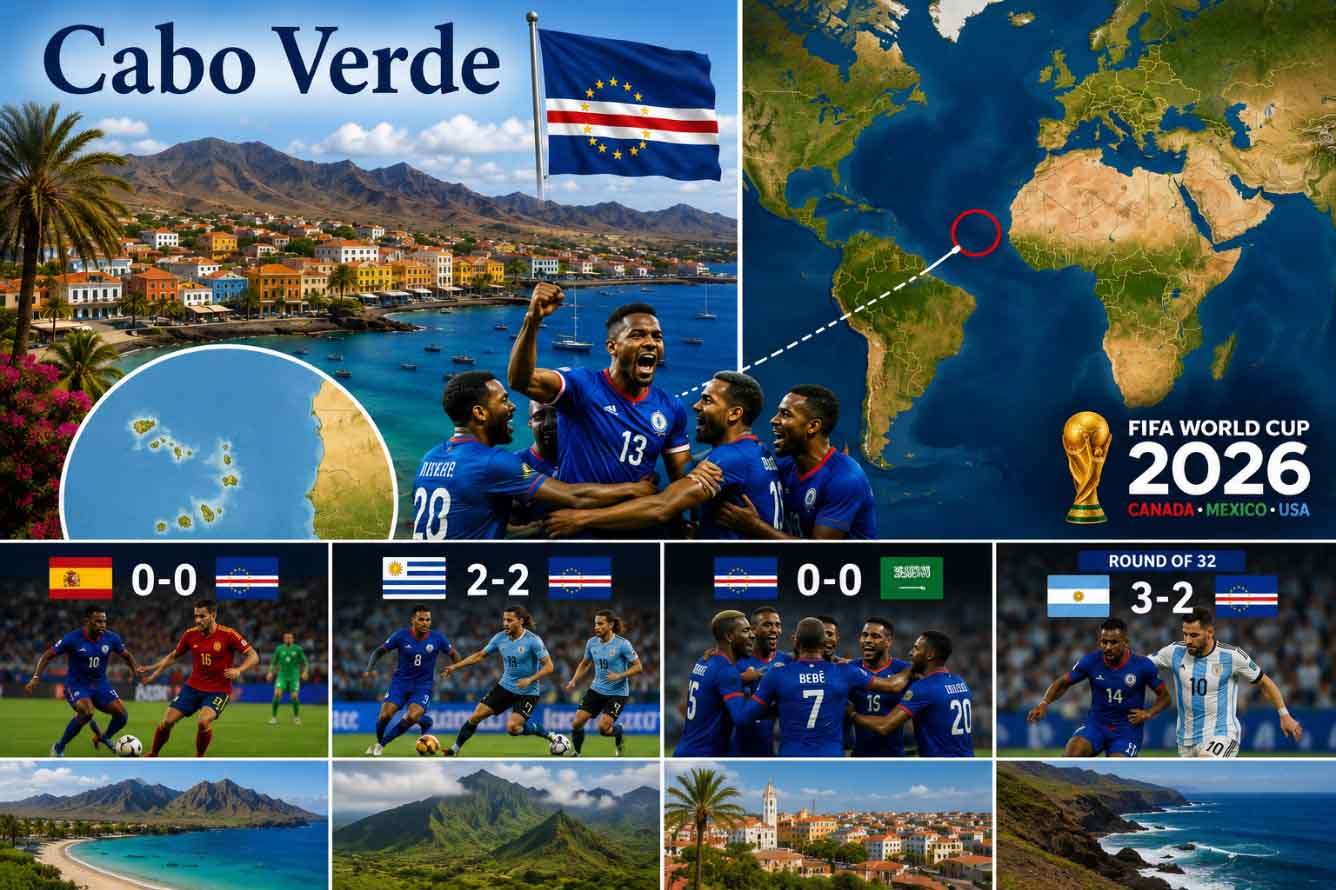
A Small Country’s Big Challenge
At the 2026 FIFA World Cup, I found myself repeatedly coming across the name of one particular country: Cabo Verde. If you’re not a football fan, you may never have heard of it before. But now, this small island nation is drawing attention from fans worldwide. Why? Because despite making their World Cup debut, they held eventual champions Spain to a 0–0 draw in the group stage, and in the knockout round, they scored twice against Argentina (the tournament’s runners up led by Messi) before narrowly losing 2–3. As one of the tournament’s biggest surprise teams, their performance left a strong impression. For a nation of only about 600,000 people to stand toe to toe with European champions Spain and South American champions Argentina was remarkable.
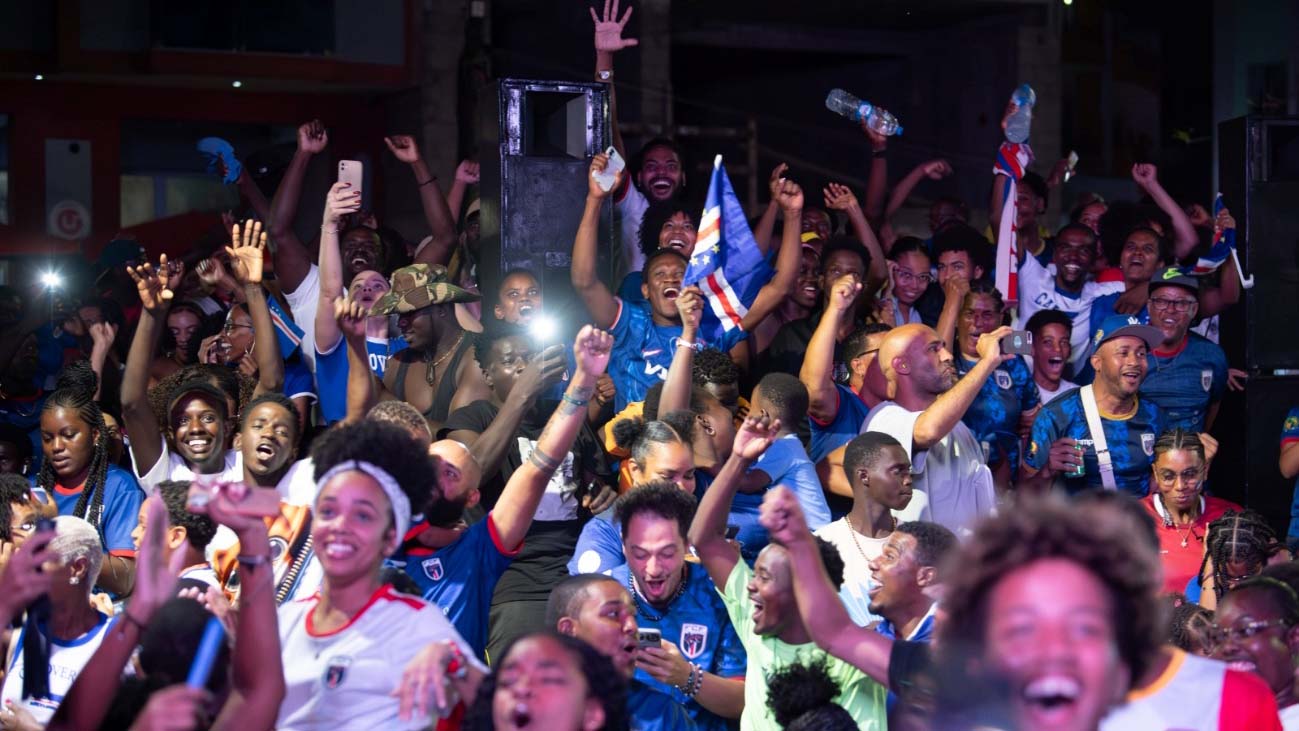
I work in Africa, yet I must admit I knew nothing about Cabo Verde before. This World Cup prompted me to learn more — and it turned out to be a fascinating country.
Where is Cabo Verde?
Cabo Verde lies about 500–600 km off the coast of Senegal in West Africa, a volcanic archipelago of 10 islands in the Atlantic Ocean. Its land area is about 4,033 km². To put that in Japanese terms:
- Roughly three times the size of Okinawa Island (about 1,200 km²)
- Almost the same size as Shiga Prefecture (about 4,000 km²)
When we think of “African countries,” we often imagine vast continental nations, but island states like Cabo Verde are part of Africa’s diversity.
Why the Name “Cabo Verde”?
“Cabo Verde” means “Green Cape” in Portuguese, originally named after Cap Vert (Green Cape) in Senegal. For a long time, the English name “Cape Verde” was used, but today the official name “Cabo Verde” is internationally recognized.
History
Cabo Verde was originally uninhabited. Portuguese explorers arrived in the 15th century, and the islands became a trading hub between West Africa and Europe. Later, they developed as a key stop in the Atlantic slave trade. Long a Portuguese colony, Cabo Verde gained independence on 5 July 1975. Today, it is known as one of Africa’s more stable democracies.
The Flag Speaks of the Atlantic
Unlike many African flags with red, yellow, and green, Cabo Verde’s flag is blue based. The blue represents the Atlantic Ocean, while the circle of 10 stars symbolizes the 10 islands. It is a design that perfectly reflects an African island nation.
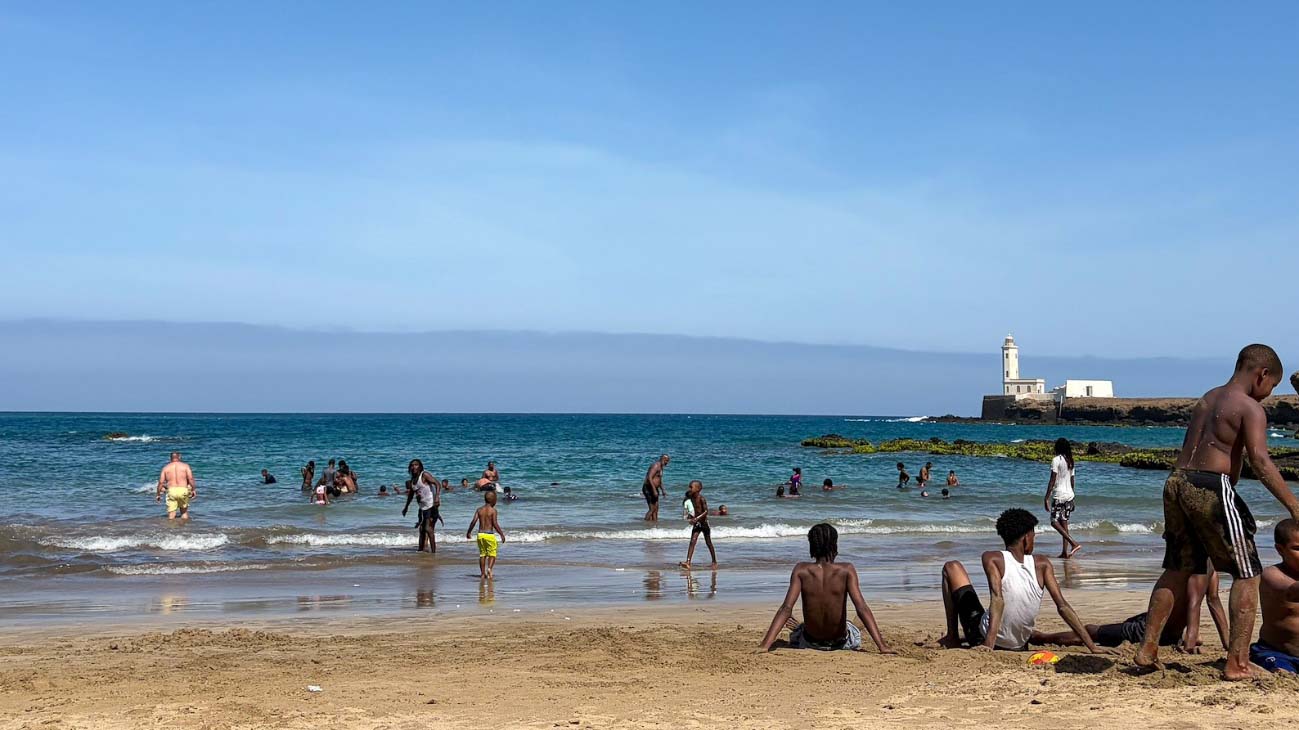
Culture and Language
The official language is Portuguese, but daily life is conducted largely in “Kriolu,” a Creole language blending Portuguese and West African tongues. The people’s heritage is equally mixed, combining Portuguese and African roots. Cabo Verde is also famous for its music, especially the soulful “Morna,” known worldwide. The country carries a unique charm — African, yet with touches of Europe and the Caribbean.
A Song Called “SAIKO DAYO (最高だよ!)” - One delightful discovery: Cabo Verde has a song filled with the Japanese phrase “Saiko Dayo!” (“It’s the best!”). You can listen by clicking here.The origin is fascinating — in the 1960s, Japanese tuna fishing vessels docked in Cabo Verde, and local people picked up the phrase from Japanese fishermen. Over time, it became embedded in Cabo Verdean music, and today “Saiko Dayo” remains one of the country’s iconic songs, keeping Japanese alive in its title for more than half a century.
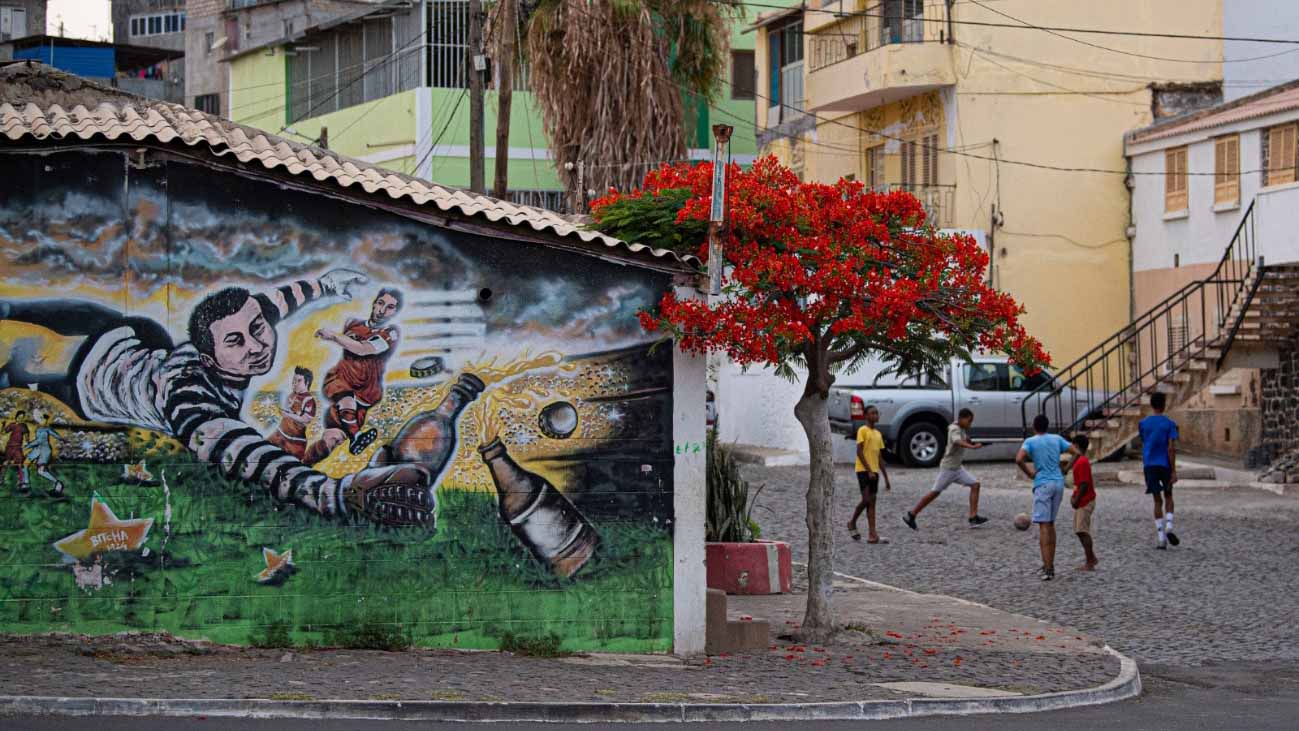
Africa Still Holds Many Unknowns
Working across Africa, I am constantly reminded that there are countless countries with unique stories yet to be widely known. Africa has 54 nations — not only famous ones like Kenya, South Africa, Egypt, Nigeria, and Morocco. Even a small island nation of 600,000 can shock the world at the World Cup. Each country has its own history, culture, language, and way of life.
Through this World Cup, many people may have learned of Cabo Verde for the first time. I was one of them. The more I explore Africa, the more discoveries I make. With so many countries I have yet to visit, my curiosity about Africa never runs out.
References | Notes
- FIFA World Cup 2026 / Spain 0-0 Cabo Verde(ワールドカップ結果)
https://www.fifa.com/ - Encyclopaedia Britannica: Cabo Verde
https://www.britannica.com/place/Cabo-Verde - CIA World Factbook: Cabo Verde
https://www.cia.gov/the-world-factbook/countries/cabo-verde/ - Cabo Verde Government Portal
https://www.governo.cv/ - The Guardian: Cape Verde shock Spain with historic draw on World Cup debut
https://www.theguardian.com/football/2026/jun/15/spain-cape-verde-world-cup-2026-group-h-match-report - Cinii: Revisiting Saiko Dayo the Japanese Fishermen’s Song of Cabo Verde its Societal and Creative Values
https://cir.nii.ac.jp/crid/1390291767813624704