
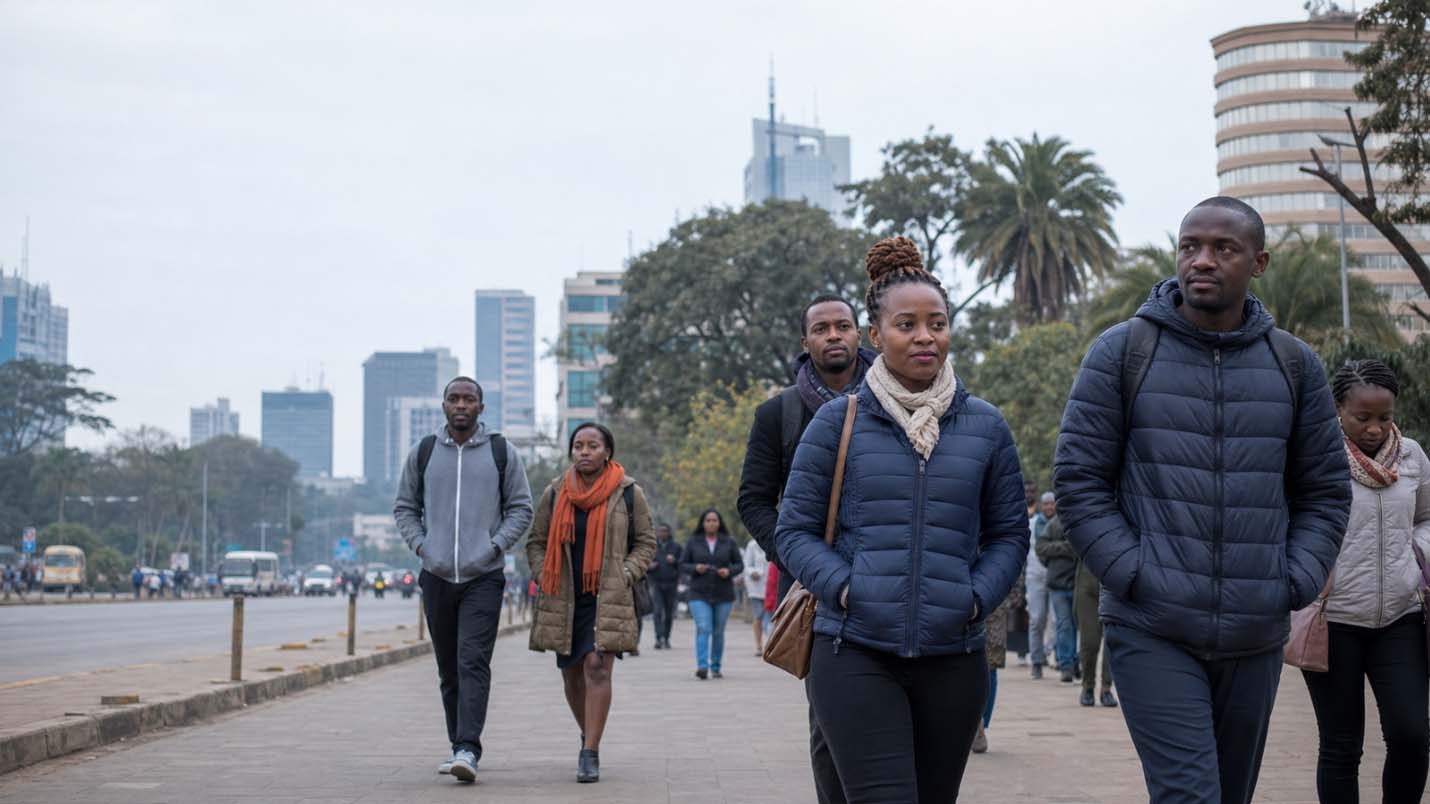
Many people imagine that Africa is hot all year round. If you visit Nairobi with that expectation, you may be surprised by how cold it can actually feel.
Especially during the mornings in July and August, I never leave home without a jacket. It's also common to see Kenyans wearing down jackets around the city. Nairobi lies at approximately 1° south latitude—almost directly on the equator. So why is it so cool, and why does it even have seasonal differences?
The Reason It's Cool Year-Round: Elevation
The biggest reason Nairobi remains relatively cool throughout the year is its elevation. The city sits at an altitude of approximately 1,700–1,800 meters above sea level.
As a general rule, the temperature decreases by about 0.6°C for every 100 meters of elevation gain. In reality, temperatures are also influenced by wind, clouds, and local terrain, so the relationship is not perfectly linear. However, Nairobi is high enough above sea level to be considerably cooler than coastal cities.
In other words, just because a place is close to the equator does not necessarily mean it is hot.
Why Is July and August Especially Cold?
According to the Kenya Meteorological Department, July is generally the coldest time of the year in the highlands east of the Rift Valley, including Nairobi, with cool conditions often continuing through August.
During July and August, morning temperatures in Nairobi can drop to around 13°C. If the skies remain cloudy, daytime temperatures often stay around 20°C, and indoors without heating, it can feel colder than the numbers suggest. On particularly cold days, some observation stations have even recorded temperatures below 10°C.
Three main factors combine to create this cold season.
First, the Southern Hemisphere is in winter, meaning the amount of solar energy reaching the ground is reduced. Although Nairobi is close to the equator and does not experience four distinct seasons like Japan, the height of the sun and the amount of solar radiation received at the surface are not completely constant throughout the year.
Second, the southeast monsoon brings relatively cool air from the Indian Ocean, carrying the influence of winter conditions in the Southern Hemisphere.
Third, cloud cover plays an important role. During July and August, Nairobi is often covered by low clouds, and light morning drizzle is common. When clouds block sunlight, daytime temperatures near the ground do not rise as much.
The combination of Southern Hemisphere winter, southeast monsoon winds, thick cloud cover, and Nairobi's high elevation creates surprisingly chilly weather for a city so close to the equator.
On the other hand, February and March are generally sunnier, and daytime temperatures can feel quite warm. Although Nairobi's seasons are not as distinct as Japan's, the city still experiences clear seasonal patterns.
Even Within East Africa, Cities Have Different Climates
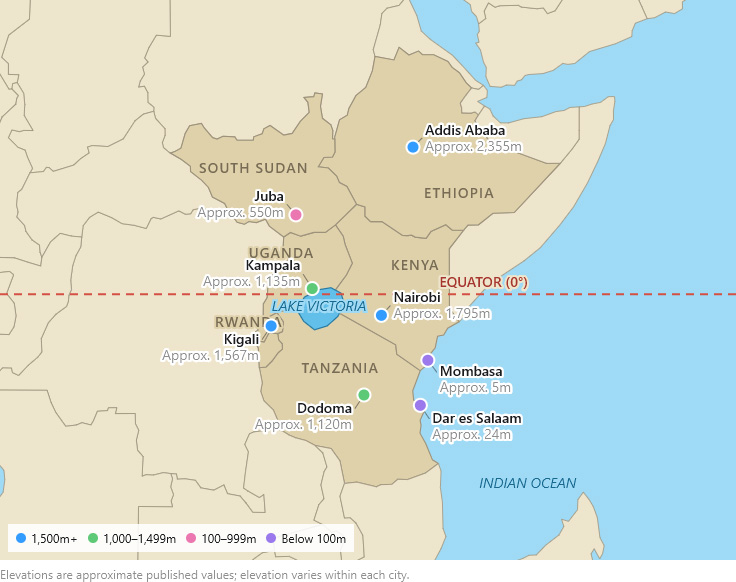
When considering East Africa's climate, it is important to look beyond latitude. Elevation and proximity to the ocean or large lakes also make a significant difference.
| City | Geographical Feature | Clothing Guide (July–August) |
|---|---|---|
| Nairobi | Elevation of approximately 1,700–1,800 m | A jacket is necessary in the mornings and evenings. |
| Addis Ababa | Elevation of approximately 2,300 m | A jacket is necessary in the mornings and evenings. Because it is in the Northern Hemisphere, the coldest period is from November to January. |
| Kigali | Elevation of approximately 1,500 m | A light jacket is recommended. |
| Kampala | Elevation of approximately 1,135 m; close to Lake Victoria | A light jacket for the mornings and evenings is recommended. |
| Mombasa | Indian Ocean coastal region | Clothing suitable for hot and humid weather is necessary. |
| Dar es Salaam | Indian Ocean coastal region | Clothing suitable for hot and humid weather is necessary. |
Addis Ababa sits at an even higher elevation than Nairobi and remains relatively cool throughout the year. During July and August, which coincide with its main rainy season, clouds and rainfall keep daytime temperatures from rising significantly. However, the lowest overnight temperatures usually occur between November and January, when the air is dry and skies remain clear.
Kigali and Kampala also enjoy relatively mild climates despite being close to the equator because of their higher elevations.
In contrast, Mombasa and Dar es Salaam are low-lying coastal cities along the Indian Ocean. Even in July and August, they remain warm and humid. Traveling from Nairobi to Mombasa, for example, requires a significant change in clothing despite both cities being in East Africa.
The Cold Season and the Maasai Mara Tourist Season
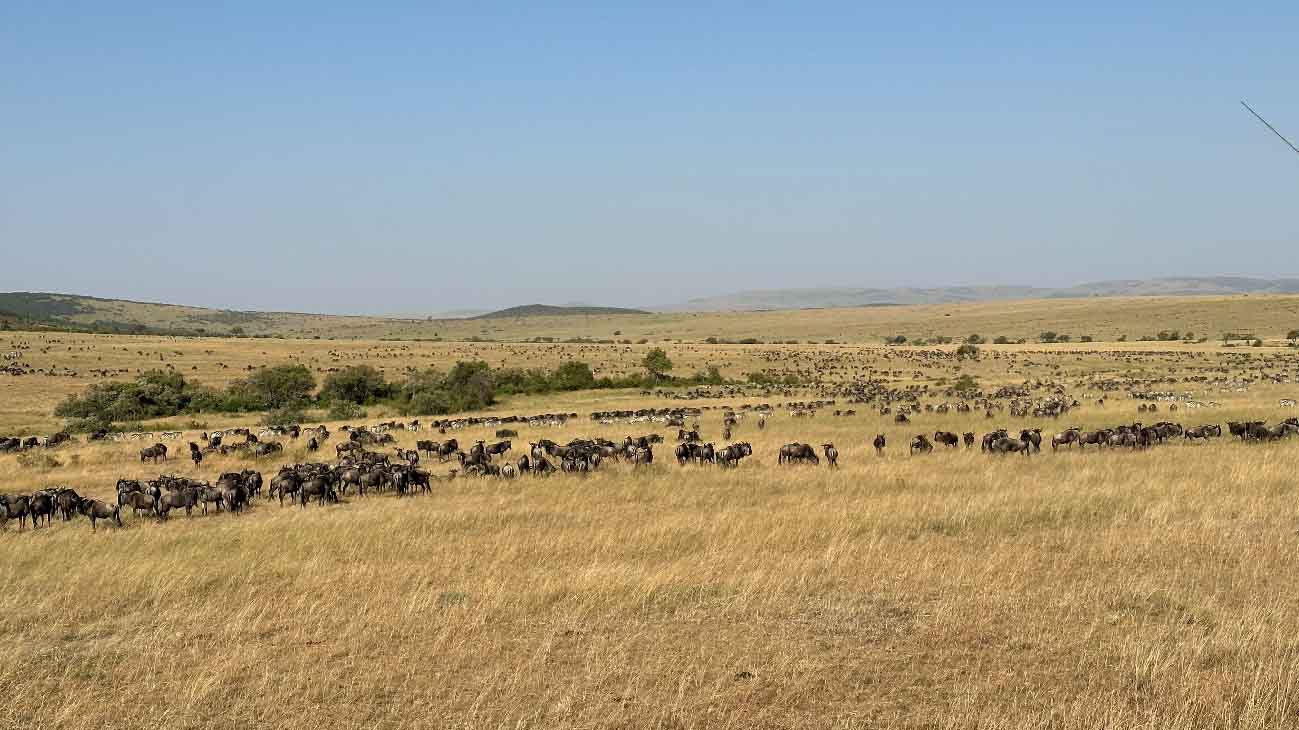
July and August are part of the dry season across much of Kenya and also coincide with the peak tourist season in the Maasai Mara National Reserve.
This is the time of the famous Great Migration, when enormous herds of wildebeest, zebras, and other animals move into Kenya's Maasai Mara from the Serengeti. The herds typically begin arriving around July, attracting large numbers of visitors throughout August and September.
However, the animals are not migrating because of the cold weather itself. They move in search of fresh grass and water that change with rainfall patterns. According to the Kenya Wildlife Service (KWS), wildebeest migration within the Maasai Mara ecosystem is driven primarily by rainfall patterns.
The combination of the dry season, the Great Migration, and the European summer holiday period makes July and August one of the busiest times of year for tourism in the Maasai Mara.
Like Nairobi, the Maasai Mara is located in Kenya's inland highlands. Early morning game drives can be quite chilly due to the cold wind, so visitors should also bring warm clothing.
The "Long Rains" and "Short Rains" Don't Always Mean Heavy or Light Rainfall
In Kenya, March to May is generally known as the "long rains," while October to December is called the "short rains." However, the amount and pattern of rainfall vary considerably depending on the region and the year.
According to the Kenya Meteorological Department, Kenya's average temperature has increased by approximately 0.88°C since 1960. In recent years, rainfall has become increasingly uneven across both time and location, with floods, droughts, strong winds, and localized cold spells affecting daily life and transportation.
If you are traveling to East Africa on business, avoid assuming that "Africa means summer clothing." Instead, check the elevation of the cities you plan to visit, whether they are inland or coastal, and the season during your trip.
For Nairobi, bring a jacket for the cool mornings and evenings. For Mombasa and Dar es Salaam, lightweight and breathable clothing is more suitable. If you will be visiting multiple cities, layering your clothing is the easiest way to adapt to changing temperatures. Finally, check the local weather forecast before departure and pack clothing appropriate for each destination.
References | Notes
Disclaimer: The information provided in this article is for general informational purposes only and may vary depending on local regulations and operational conditions. Please contact MOL or relevant authorities for case-specific guidance.