
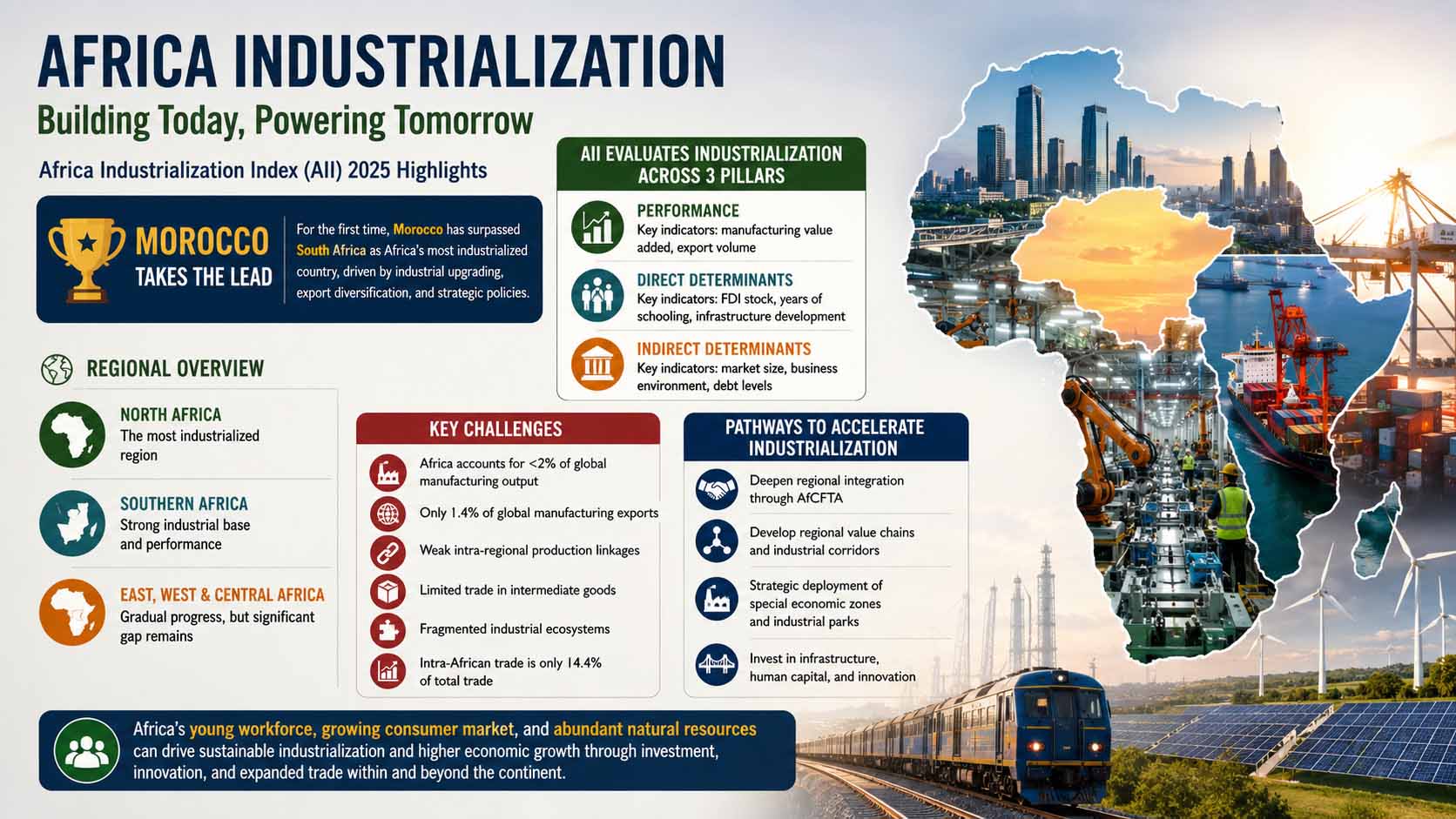
In Africa, industrialization is being promoted with the aim of moving away from the export of unprocessed raw materials and creating employment.
The African Development Bank has released the Africa Industrialization Index (AII) 2025, which evaluates the progress of industrialization across 54 African countries between 2010 and 2024.
In the overall ranking, Morocco surpassed South Africa—previously the top-ranked country since 2010—for the first time. This shift is attributed to Morocco’s continuous industrial upgrading, diversification of exports, and effective strategic industrial policies. While South Africa remains one of the continent’s leading industrial countries, a decline in its industrial competitiveness has been noted.
The AII evaluates industrialization based on the following three pillars:
- Performance (key indicators include manufacturing value added and export volume)
- Direct determinants (key indicators include foreign direct investment stock, years of schooling, and infrastructure development index)
- Indirect determinants (key indicators include market size, business environment, and debt levels)
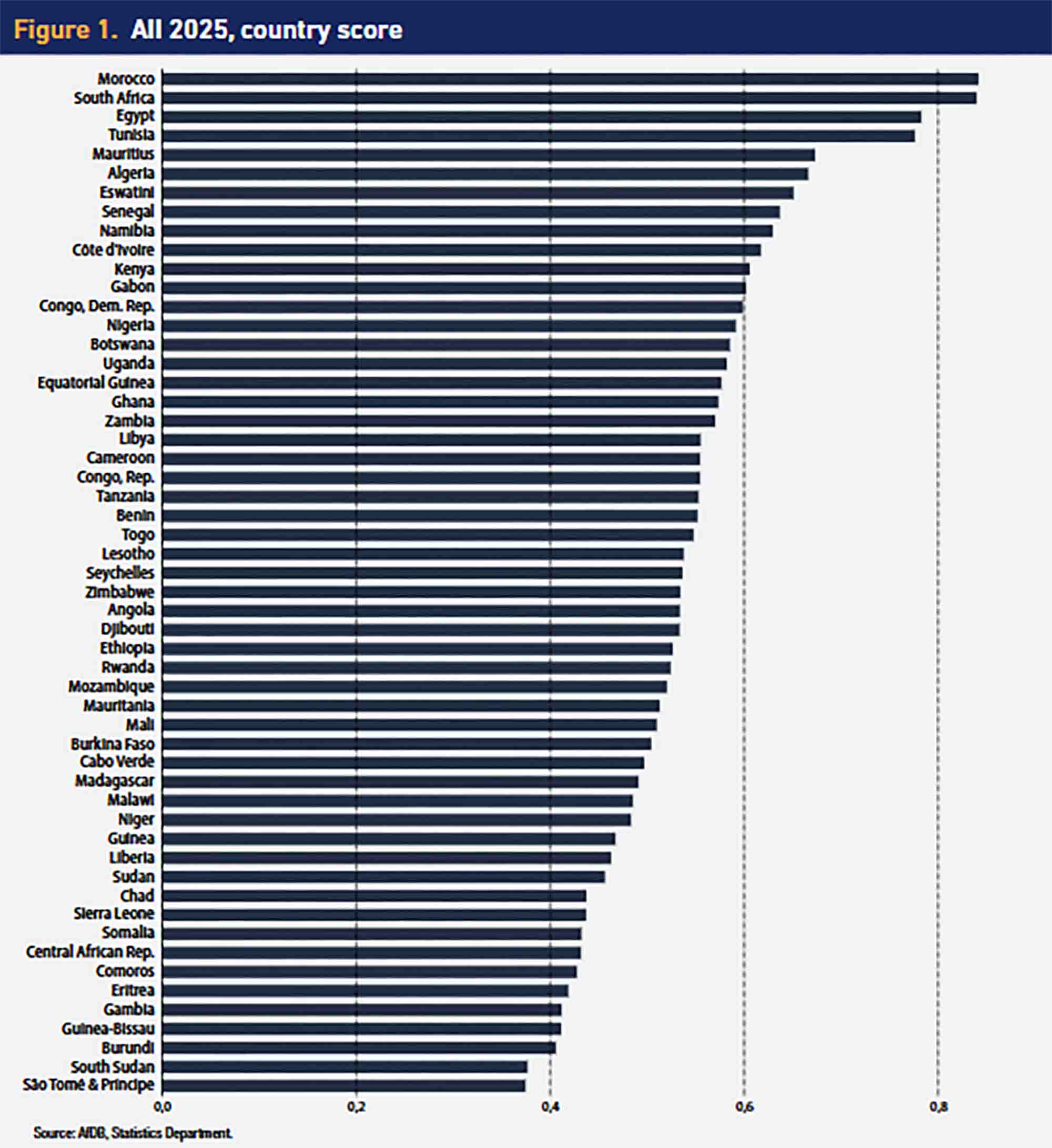
By region, North Africa continues to be the most industrialized, followed by Southern Africa. While gradual progress has been observed in East, West, and Central Africa, a significant gap still remains compared to North and Southern Africa.
According to the African Development Bank, however, Africa accounts for less than 2% of global manufacturing output and only 1.4% of global manufacturing exports. Factors hindering continent-wide industrial expansion include weak intra-regional production linkages, limited trade in intermediate goods, and fragmented industrial ecosystems. These challenges are also reflected in the low level of intra-African trade, which represents only 14.4% of total trade.
To accelerate industrialization going forward, in addition to national industrial strategies, the Bank points to the importance of deeper regional integration through the African Continental Free Trade Area (AfCFTA), the development of regional value chains and industrial corridors, the strategic deployment of special economic zones and industrial parks, and investment in infrastructure, human capital, and innovation.
Africa’s strengths—its young labour force, its potential as a large future consumer market, and its abundant natural resources—suggest that if industrialization can be advanced through infrastructure development and education, and if trade within and beyond the continent can be expanded, higher economic growth will be achievable.
References | Notes
Disclaimer: The information provided in this article is for general informational purposes only and may vary depending on local regulations and operational conditions. Please contact MOL or relevant authorities for case-specific guidance.