
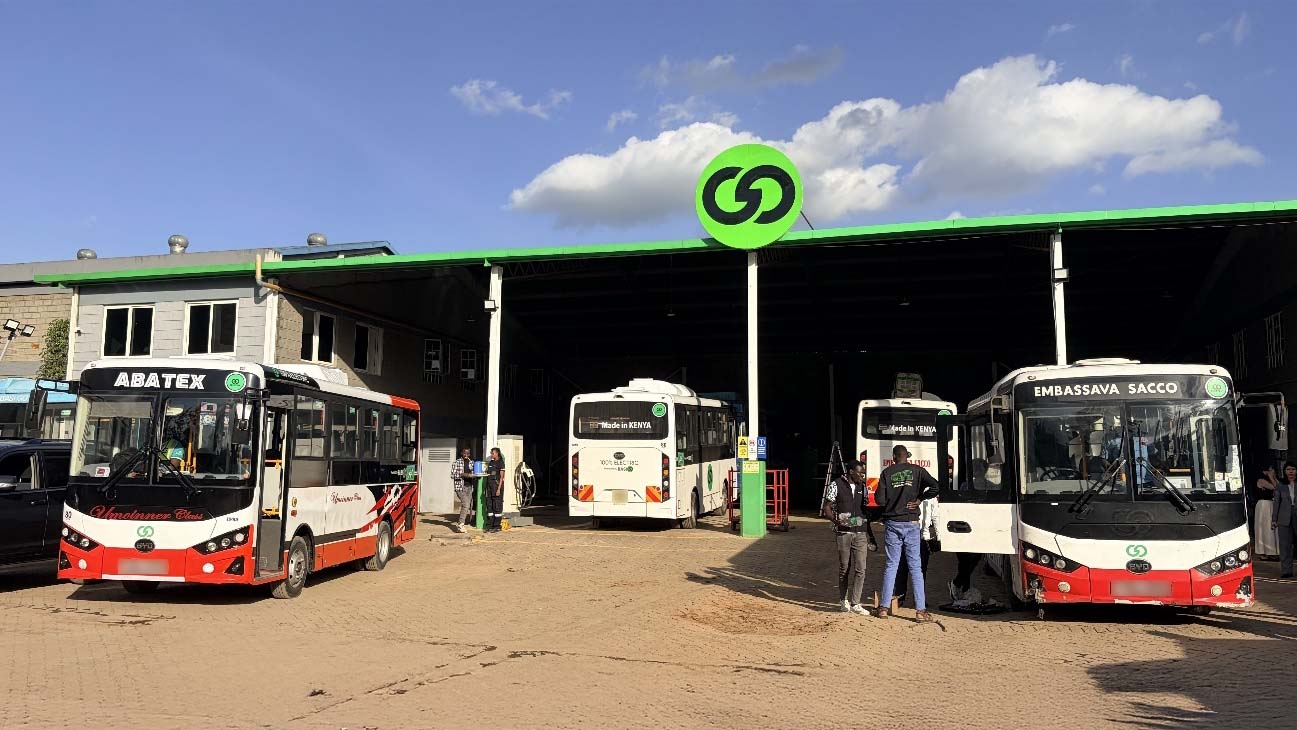
On May 15, 2026, I visited the service centre and charging facility of BasiGo, East Africa’s largest EV bus company, located in Nairobi. Seeing the rows of electric buses and charging stations, and the operations designed around overnight charging, I realized this was not just about “electrifying buses” — it was about “transforming the very structure of public transport.” The backdrop to this lies in Kenya’s unique electricity situation and bus market structure. While diesel-powered Matatus (see the January 8, 2025, blog “Heartbeat of Nairobi: The Colorful World of Matatus” ) remain dominant, a new trend is emerging in Kenya that deserves attention.
A Fragmented Bus Market
Kenya’s public transport is dominated by privately owned Matatus. In Nairobi alone, about 20,000 operate in a highly fragmented market, managed through SACCOs (cooperatives). Buses are owned by individual entrepreneurs, with financing, operations, and maintenance all separated. This structure is flexible but inefficient. Rising diesel prices have further destabilized profitability. With subsidies shrinking, fuel costs have soared, eroding margins. In short, the market urgently needs structural change — both in terms of “fuel” and “finance.”
Why EV Buses Work in Kenya
Kenya is uniquely suited for EV adoption because of its electricity mix. About 90% of Kenya’s power comes from renewables: ~45% geothermal, ~25% hydro, ~15% wind. At night, surplus electricity is available. EV buses are designed to charge overnight, making use of this otherwise unused energy. Nighttime electricity is cheaper than daytime rates, so with diesel at KSh242.92 per litre (US$1.88 / ¥298 as of May 15), EVs gain cost competitiveness. And because 90% of the grid is renewable, the carbon reduction impact is profound. Each bus cuts over 50 tons of CO₂ annually, while also reducing urban air pollution and noise. Thus, in Kenya, EVs are not just an environmental measure — they are an “economically rational choice.”
BasiGo’s Innovation Lies in the Model, Not the Vehicle
The essence of BasiGo is not simply buses that can run ~250 km per charge. Its real innovation is the integrated EaaS (Electric Mobility as a Service) model, combining vehicles, electricity, infrastructure, and financing. Traditionally, bus owners faced huge upfront costs, plus fuel, maintenance, and financing risks. BasiGo replaces this with a pay-as-you-drive leasing model. Owners can access:
- Vehicles
- Charging
- Maintenance
Operational Excellence
At the facility I visited, what stood out was the completeness of operations. After daytime service, buses return at night for:
- Charging
- Inspection
- Cleaning
The Meaning of “Made in Kenya”
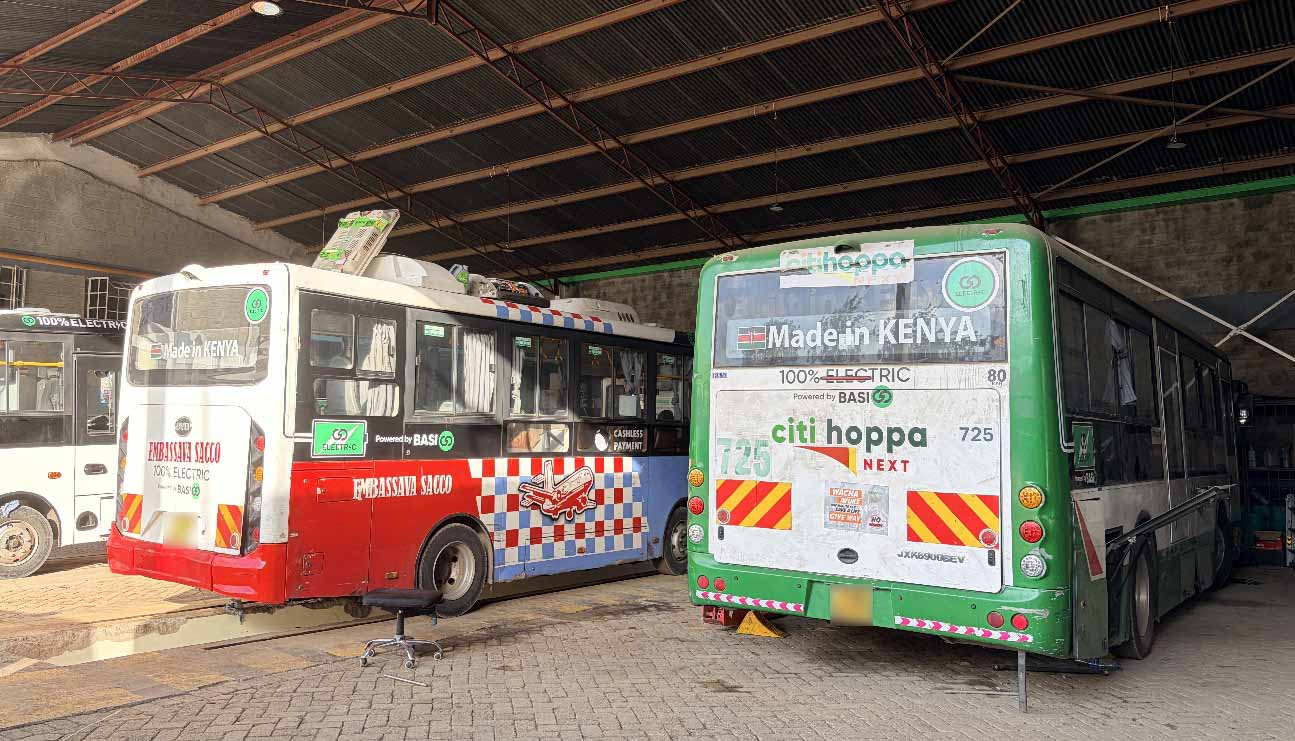
One striking detail was the “Made in Kenya” sticker on the buses. BasiGo assembles buses at the KVA plant ~40 km outside Nairobi, optimizing for local tax and regulatory conditions. Beyond tax benefits, this signals intent to grow a local supply chain. While many parts are still imported, local assembly represents a bold step toward building an African industrial base. This is not just mobility — it carries industrial policy significance.
Expansion into Smaller Vehicles
At the facility I visited, what stood out was the completeness of operations. After daytime service, buses return at night for:
- Short distances
- High frequency
- Flexible routes
Demand Already Exists
Currently, BasiGo operates ~136 buses in Kenya, under 1% of Nairobi’s ~20,000-bus market. Yet reservations for ~6,000 buses are already in place, with over 1,200 customers having paid deposits. The bottleneck is not demand but supply — specifically financing. EV bus expansion is capital-intensive, requiring massive investment in vehicles and infrastructure. This will determine future growth.
Beyond “Bus Electrification”
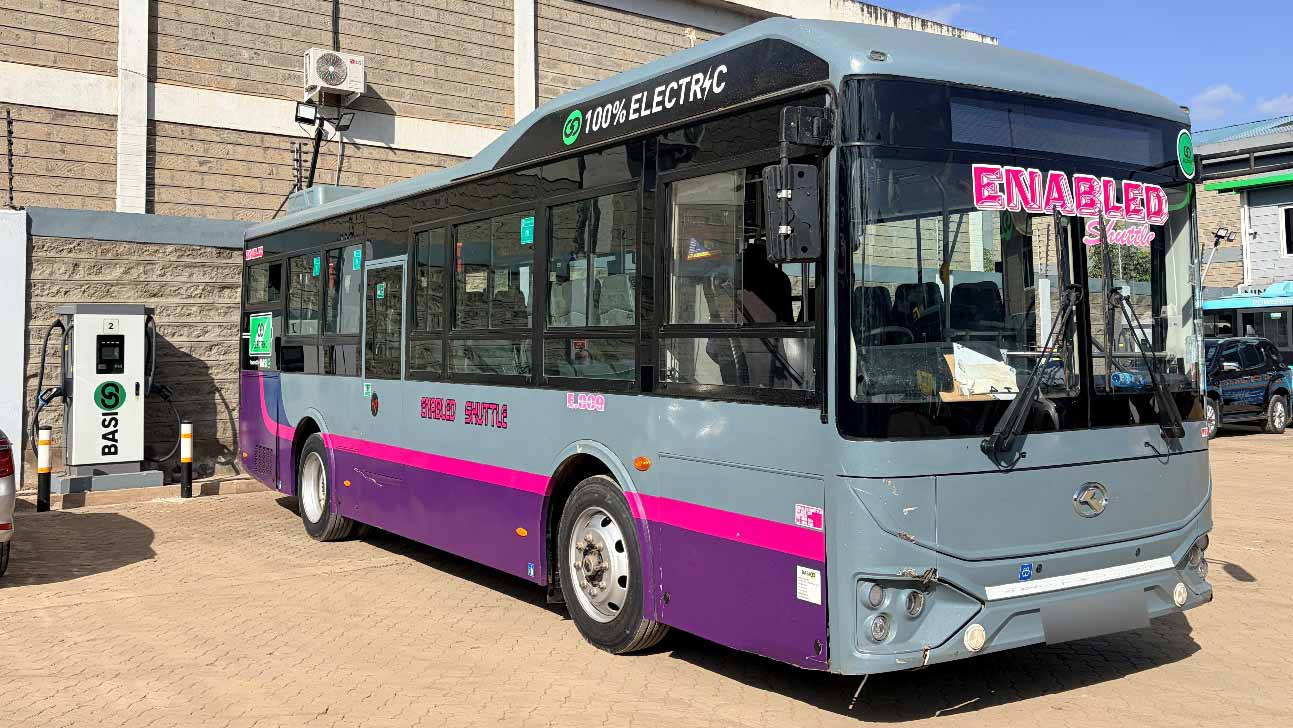
What BasiGo is attempting is not just an EV bus business. It is restructuring fragmented, inefficient public transport by integrating:
- Data
- Finance
- Infrastructure
Electric buses gliding quietly through Nairobi are not just new vehicles. They mark the beginning of an “infrastructure revolution” that could reshape African cities. How this model spreads across East Africa — and eventually the continent — is something I will follow with great anticipation.
References | Notes
Disclaimer: The information provided in this article is for general informational purposes only and may vary depending on local regulations and operational conditions. Please contact MOL or relevant authorities for case-specific guidance.