
During the New Year holidays, I visited Botswana. My destination was the Makgadikgadi Salt Pans. Although I am based in Southern Africa, it had been a long time since I placed myself in a place with so little around it.
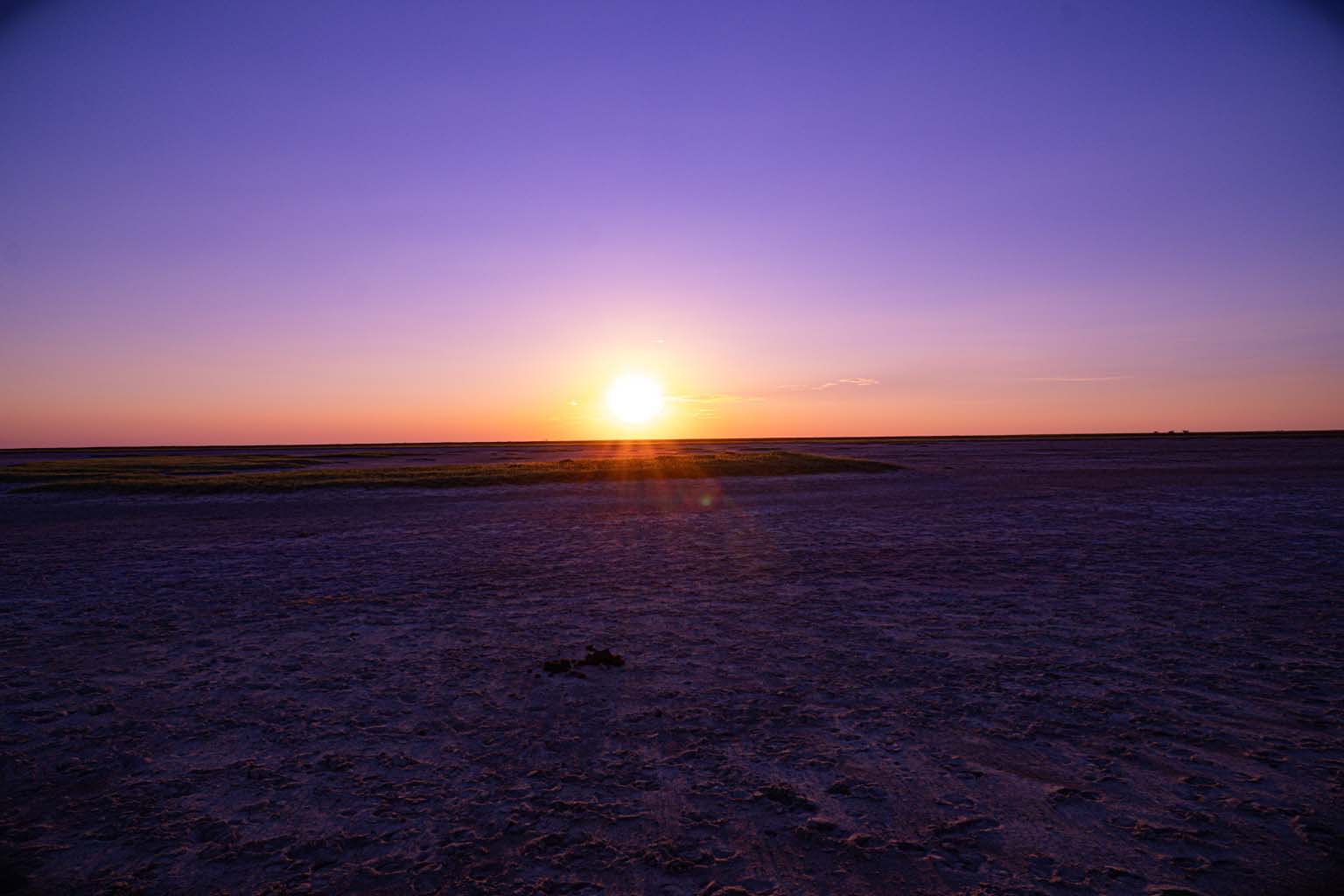
The land stretches endlessly to the horizon. There are almost no man-made structures in sight—only sky, ground, and the slow movement of light and shadow. Here, rather than ‘seeing’ something, one feels the passage of time itself.
This extreme minimalism, I believe, is the true appeal of Makgadikgadi.
Meerkats and a Relationship Where Humans Are Not the Main Character
The original reason for visiting Makgadikgadi was my wife’s wish to take a photograph with seemingly human-habituated meerkats.
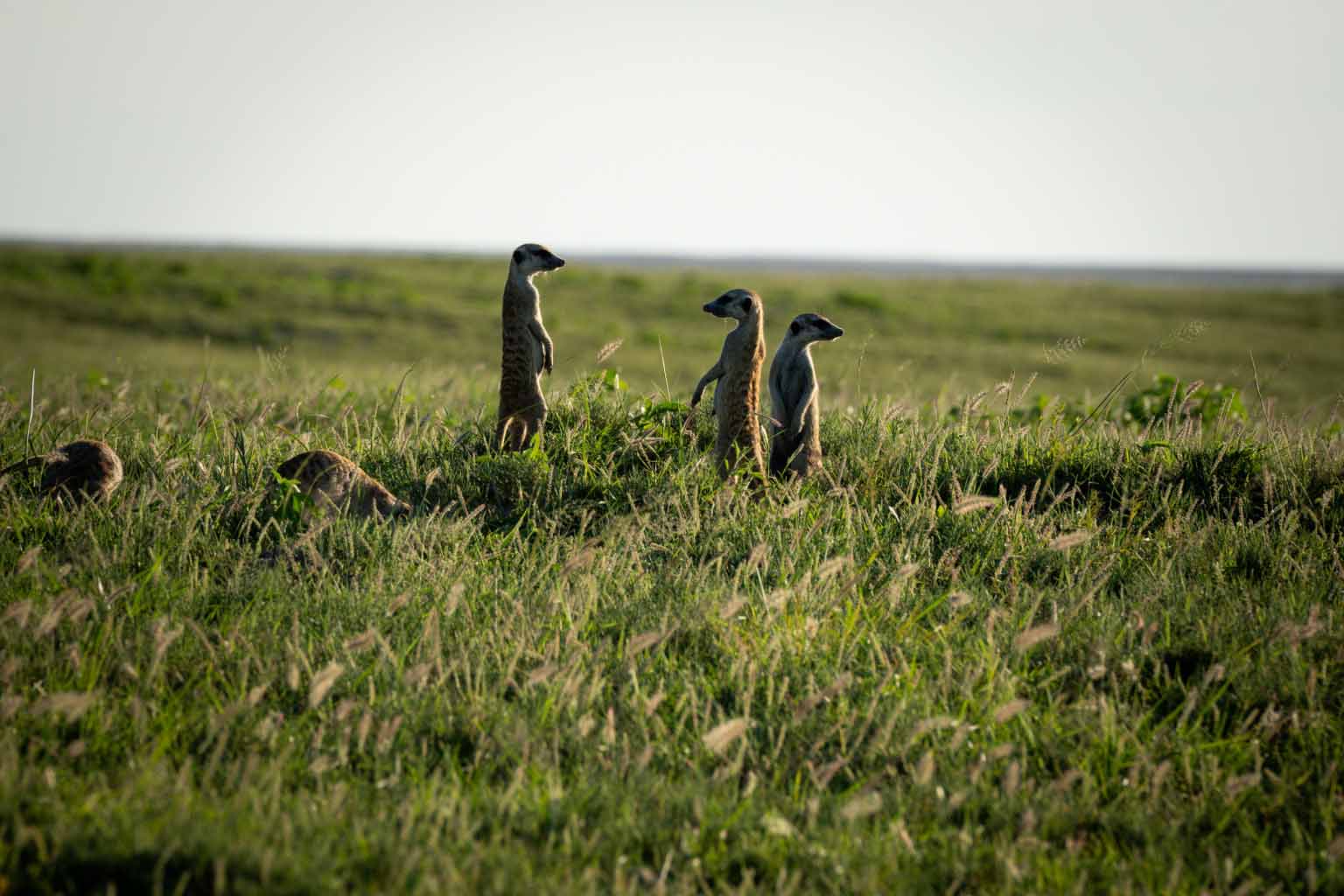
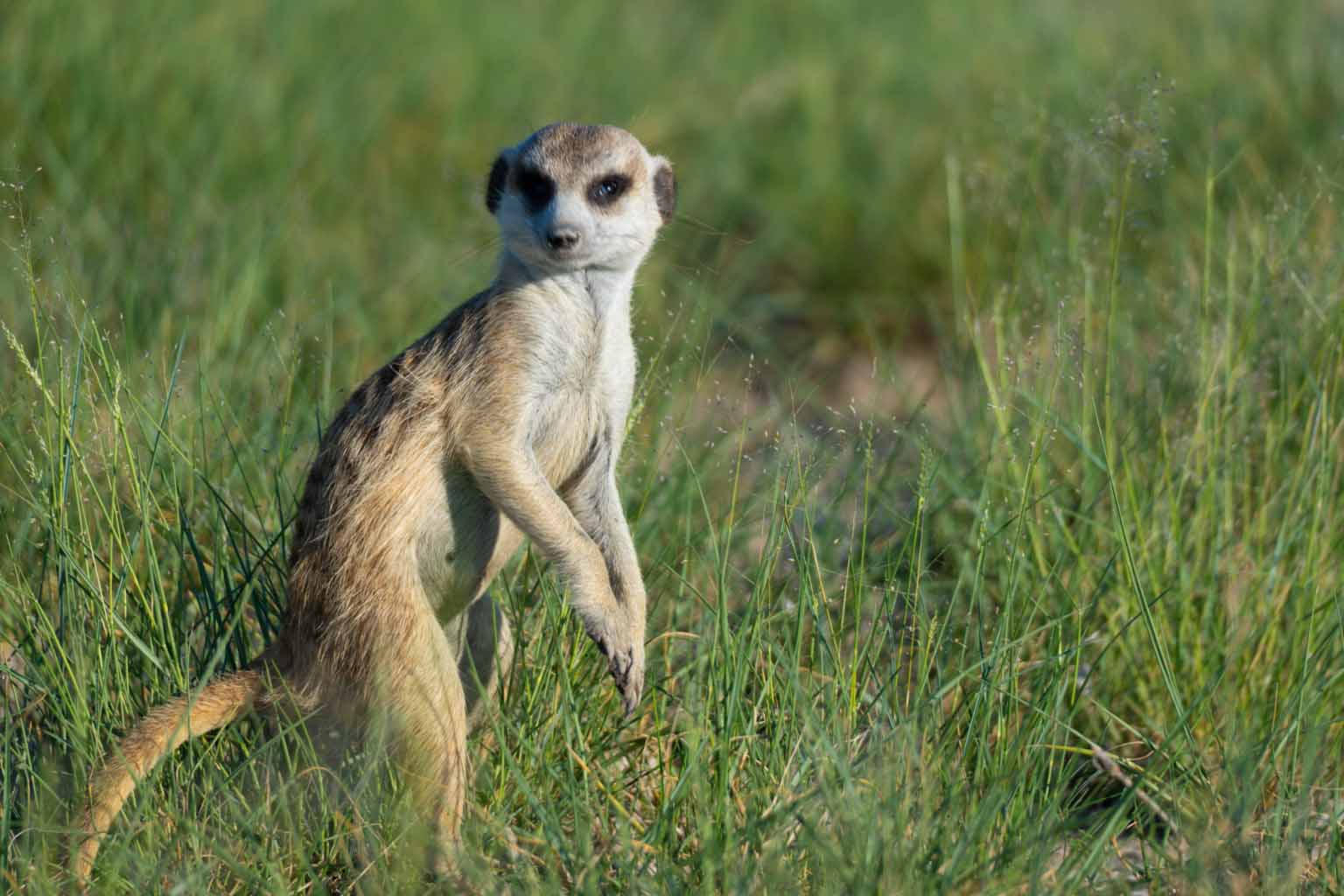
Before visiting, the images I had seen gave the impression that the animals had been conditioned for tourism. However, that assumption was completely overturned once we arrived and listened to the local explanation.
The meerkats live in what is referred to as a ‘colony,’ but human interference is kept to an absolute minimum. The guiding principle is essentially to do nothing.
At first, the animals flee as soon as humans appear—sometimes from several hundred meters away. They are never chased.
However, when the same people return to the same place over months, without feeding, touching, or interfering, simply remaining present, the meerkats’ reactions gradually change.
Eventually, they come to recognize humans as harmless and not worth reacting to.
At that point, even if people stand nearby, the meerkats no longer flee. It feels less like we have entered their world, and more like they have chosen to ignore us.
The Harsh Reality Behind Their Charm
There is, however, no staged sense of safety.
During our stay, we were told quite calmly that just before our arrival, five members of the colony had been taken by a snake.
Human presence does not soften nature’s severity.
Behind their charming appearance, survival remains precarious; individuals present one day may be gone the next.
Not protecting. Not managing. Not intervening. And yet, humans and animals are able to share the same space.
This, to me, embodied what ‘nature as it is’ truly means in Makgadikgadi.
A Landscape That Defies the Image of a Desert: Another Face of the Kalahari
When hearing the name Kalahari Desert, I too imagined a vast expanse of dry sand.
That image is accurate during the dry season, but what I encountered in Makgadikgadi was entirely different.
Before me lay open grassland—scenery that could easily be described as savanna.
In this region, the landscape changes completely between the rainy and dry seasons, almost like flipping a coin.
Why Grasslands Appear: Geology and the Memory of Water
The reason lies beneath the surface.
Across the Makgadikgadi area, impermeable rock layers—calcrete—prevent rainwater from draining deep underground, allowing it to remain near the surface during the rainy season.
As a result:
• Rainy season: wetlands and grasslands spread widely.
• Dry season: water recedes, and the land returns to an arid state.
This dramatic transformation is also linked to the area’s ancient geography.
The present Makgadikgadi Salt Pans are considered remnants of the prehistoric Paleo-Lake Makgadikgadi.
This ancient lake once received water from major rivers such as the Okavango, Zambezi, and Kwando (now part of the Chobe system).
Even today, in years of abundant rainfall, water from the Okavango Delta flows via the Boteti River toward Makgadikgadi.
The grasslands before my eyes exist on land that was once the bottom of a river or lake, its appearance shifting with the seasons.
A Brief Time with the Ju/'hoansi (Ju’nkhoansi)
During our stay, we also joined a short interaction program with the Ju’nkhoansi people, a group within the San, once widely known as ‘Bushmen.’
There were demonstrations such as traditional fire-making, but the experience felt far removed from a staged performance.
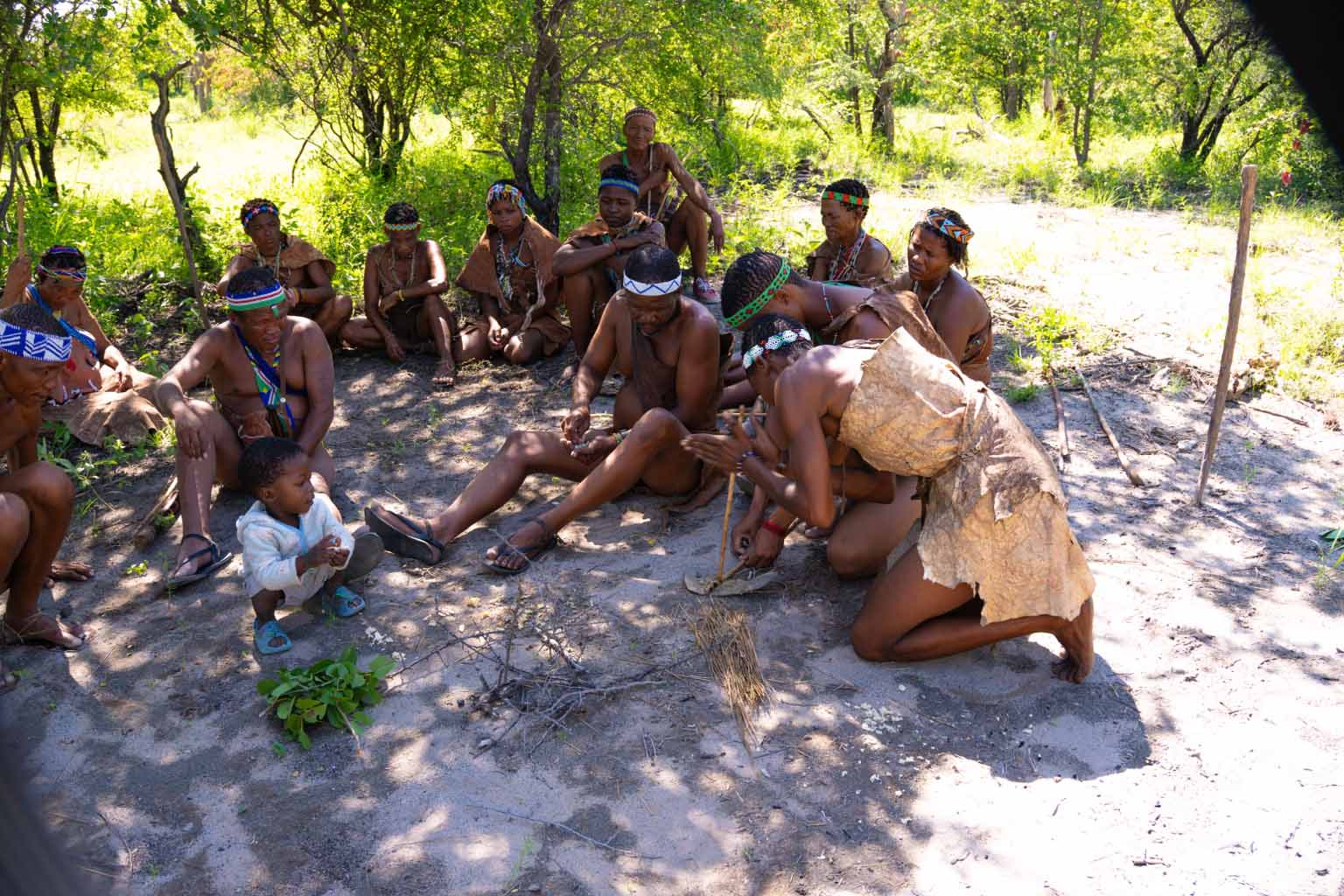
It was more a quiet sharing of daily life. If one did not overstep, neither did they. Questions were answered when asked, and the distance felt natural.
Recalling Experiences Elsewhere
I have previously encountered Maasai culture in Kenya and Tanzania.
The Maasai, with their strong sense of identity and pride, naturally leave a vivid impression in tourism settings.
By contrast, time spent with the Ju’nkhoansi in Makgadikgadi was quieter and came with far less explanation.
It is not a matter of which is better, but rather a reminder that ways of engaging with culture differ by place and context.
A Different Kind of Nature from the Serengeti or Kruger
When people think of safari destinations, the Serengeti or Kruger National Park often come to mind.
Both are outstanding examples of well-established safari experiences.
What I felt in Makgadikgadi, however, was nature that has not been arranged for display.
When there are no animals, there is simply landscape. Yet it is precisely this ‘nothing happening’ that lingers in memory.
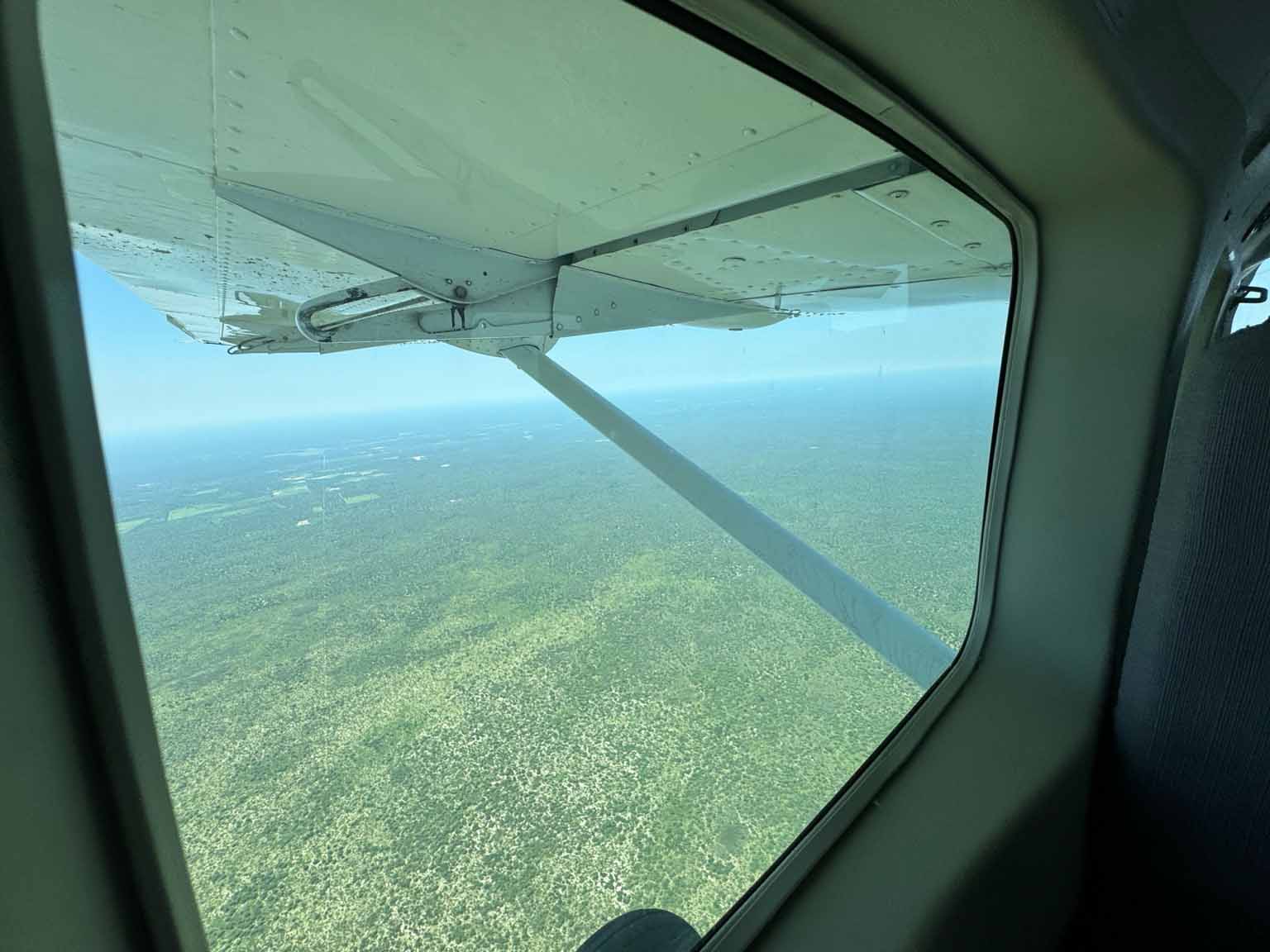
Access from Johannesburg: The Value of Inconvenience
Access from Johannesburg, the gateway to Southern Africa, is not easy.
Typically, travellers fly from Johannesburg to Maun, then continue by small charter aircraft arranged by the lodge to a private airstrip.
The journey takes time and effort. It is not a casual destination.
Yet this very inconvenience enhances the value of the place.
Because it is not easily reached, the natural environment and the distance between people remain intact.
Botswana as a Country Where One Can Travel with Peace of Mind
Throughout the trip, I was struck by the calm demeanour of the people of Botswana.
They are neither excessively friendly nor overly guarded, maintaining a comfortable and respectful distance.
As a result, the journey felt consistently safe and relaxed.
Next Time: The Okavango Delta in the Dry Season
The next place I hope to visit is the Okavango Delta.
One of the world’s largest inland deltas, where water spreads during the dry season, gliding silently through the channels by mokoro canoe promises yet another encounter with Africa as it is.
Conclusion: Choosing Restraint as a Source of Value
Working in Southern Africa, growth and development are often discussed as default assumptions.
What I experienced in Makgadikgadi was an example of how restraint and moderation can create value.
Not altering nature too much. Not placing humans at the centre.
That philosophy, I believe, is what makes this place truly special.
References | Notes
Disclaimer: The information provided in this article is for general informational purposes only and may vary depending on local regulations and operational conditions. Please contact MOL or relevant authorities for case-specific guidance.