
In the month of September, our shared-office manager -Mozambique Managed Offices- invited MOLEA Maputo Office and other tenants for a meeting about mental health. Interestingly, this was a session that many individuals shared their personal experiences with mental illness, many of them we have never had a casual conversation. At some point there was a thin line on what was considered sensitive, just to show our importance the topic was being perceived. The participants shared challenges, ways to identify and solution for illness such as anxiety, depression and burnout. In fact, that was a session where we really got to know each other, and a perfect example of how far empathy can go to save a life and improve work productivity.
In today's fast-paced professional world, long hours, demanding deadlines, constant connectivity, and growing workloads have made workplace stress a reality for many employees. While occasional pressure can help motivate performance, prolonged stress can negatively affect both mental and physical health, leading to anxiety, fatigue, burnout, and reduced productivity.
Mental health is no longer just a personal matter. It is a workplace issue that affects employees, teams, and organizations alike.
Understanding Work-Related Mental Health
Work-related mental health refers to an individual's psychological and emotional well-being in the workplace. It influences how we think, feel, and perform our daily tasks, how we manage stress, and how we interact with colleagues and clients.
When mental health is neglected, it can manifest in various ways, including:
- Persistent anxiety or excessive worrying
- Difficulty concentrating
- Fatigue and low energy levels
- Sleep disturbances
- Irritability and mood changes
- Physical symptoms such as headaches, muscle tension, stomach problems, and rapid heartbeat
- Reduced motivation and job satisfaction
Many people are surprised to learn that anxiety and stress often present themselves physically. The body's natural "fight-or-flight" response, designed to protect us from danger, can become overactive when stress is continuous. Over time, this can contribute to chronic health issues and affect overall quality of life.
The Hidden Cost of Workplace Stress
Unchecked workplace stress can have significant consequences.
For employees, it can lead to:
- Lower productivity and performance
- Increased absenteeism
- Greater risk of burnout
- Strained workplace relationships
- Reduced work-life balance
For organizations, poor mental health among employees can result in:
- Higher staff turnover
- Reduced employee engagement
- Increased healthcare costs
- Lower team morale
- Declining organizational performance
The challenge is that mental health struggles often remain invisible until they begin affecting an employee's work, physical health, or personal relationships.
Recognizing the Signs of Burnout
Burnout is a state of emotional, mental, and physical exhaustion caused by prolonged workplace stress. Common warning signs include:
- Feeling exhausted even after rest
- Losing enthusiasm for work
- Becoming increasingly cynical or detached
- Lower team morale
- Difficulty focusing or making decisions
- Feeling overwhelmed by routine tasks
- Frequent illness or physical discomfort
Recognizing these signs early allows individuals to take proactive steps before burnout becomes severe.
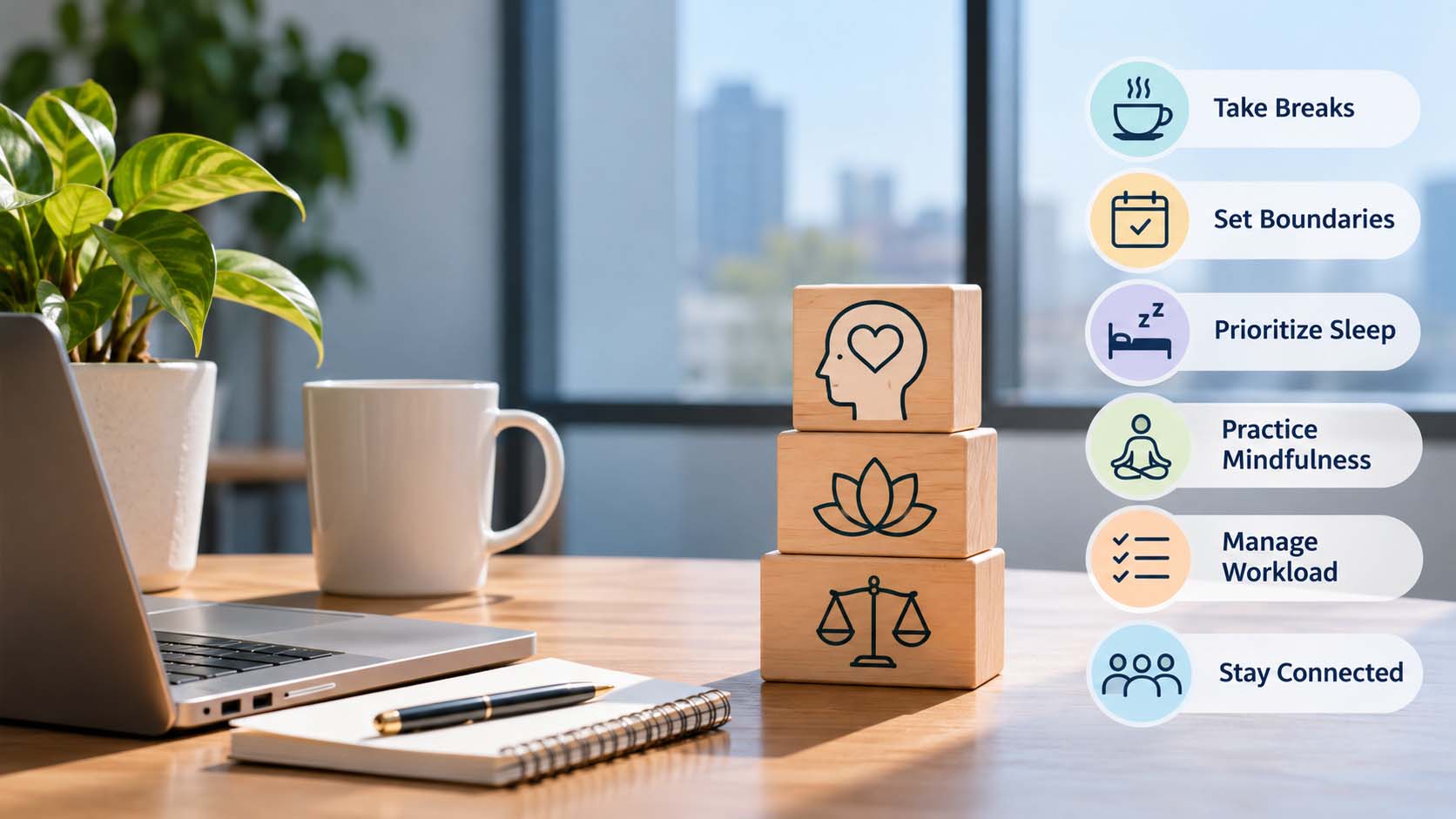
Practical Strategies for Supporting Mental Health at Work
- Take Regular Breaks
- Taking a five-minute break every hour
- Stretching between tasks
- Walking around during lunch breaks
- Stepping away from your screen periodically
- Set Healthy Boundaries
- Define a clear end to your workday
- Avoid checking emails after hours
- Take annual leave seriously and disconnect during vacations
- Prioritize Sleep
- Maintaining a consistent bedtime
- Reducing screen time before sleep
- Avoiding excessive caffeine late in the day
- Creating a relaxing nighttime routine
- Practice Mindfulness
- Deep breathing exercises
- Meditation
- Guided relaxation sessions
- Brief moments of reflection between meetings
- Manage Workload Effectively
- Break large projects into smaller tasks
- Identify your top priorities each day
- Schedule focused work periods
- Avoid multitasking whenever possible
- Stay Connected
- Build positive relationships with colleagues
- Seek support when feeling overwhelmed
- Participate in team activities
- Speak openly with trusted managers when appropriate
Short breaks throughout the day help reduce mental fatigue and improve concentration.
Consider:
Technology has blurred the line between work and personal life. Establishing boundaries is crucial.
Try to:
Sleep is one of the most important factors influencing mental health.
Try to:
Mindfulness techniques can help calm the nervous system and manage stress.
Examples include:
Even five minutes a day can make a meaningful difference.
Instead of trying to do everything at once:
Working smarter often reduces stress more effectively than simply working longer hours.
Strong social connections act as a protective factor against stress.
Employees can:
A supportive work environment makes it easier to navigate challenges.
The Importance of Seeking Professional Help
While self-care strategies are valuable, professional support may be necessary when symptoms persist or begin interfering with daily life.
Options include:
- Counseling and psychotherapy
- Cognitive Behavioral Therapy (CBT)
- Employee Assistance Programs (EAPs)
- Medical assessment and treatment when appropriate
Seeking help should be viewed as a sign of strength, not weakness. Just as we seek medical attention for physical illnesses, mental health concerns deserve professional care and attention.
Conclusion
Mental health is a fundamental component of workplace performance, personal well-being, and long-term career success. In a world where workplace pressures continue to grow, prioritizing mental wellness is not a luxury—it is a necessity.
By recognizing the signs of stress, practicing healthy habits, setting boundaries, and seeking support when needed, individuals can protect their mental health and maintain resilience in the face of workplace challenges.
Small, consistent actions taken today can prevent burnout tomorrow and help create healthier, happier, and more productive workplaces for everyone.
References | Notes
Disclaimer: The information provided in this article is for general informational purposes only and may vary depending on local regulations and operational conditions. Please contact MOL or relevant authorities for case-specific guidance.