
In May, while returning from a business trip in Angola, I found myself, as usual, reflecting during the flight on what I had learned, how those lessons connected with our priorities, and how they could bring value for our business and future opportunities. As I sat quietly, I decided to browse through the monthly Skyways magazine provided by Airlink. What usually attracts me the most are the features describing the African countries the airline serves, as I often search for clues about new areas where MOL could expand its operations. It was then that I came across an article by Mr. Mummy Mafojane entitled "High-Yield Behaviours." As I began reading it, I was immediately intrigued by its message. The article captured an important aspect of business development that many professionals engage in through travel. Mr. Mafojane introduced a methodological perspective on an activity I have been undertaking since I joined MOL. His portrayal of business travel served as both a masterclass and a practical guide for professionals seeking to maximize the value of their business travel experiences.
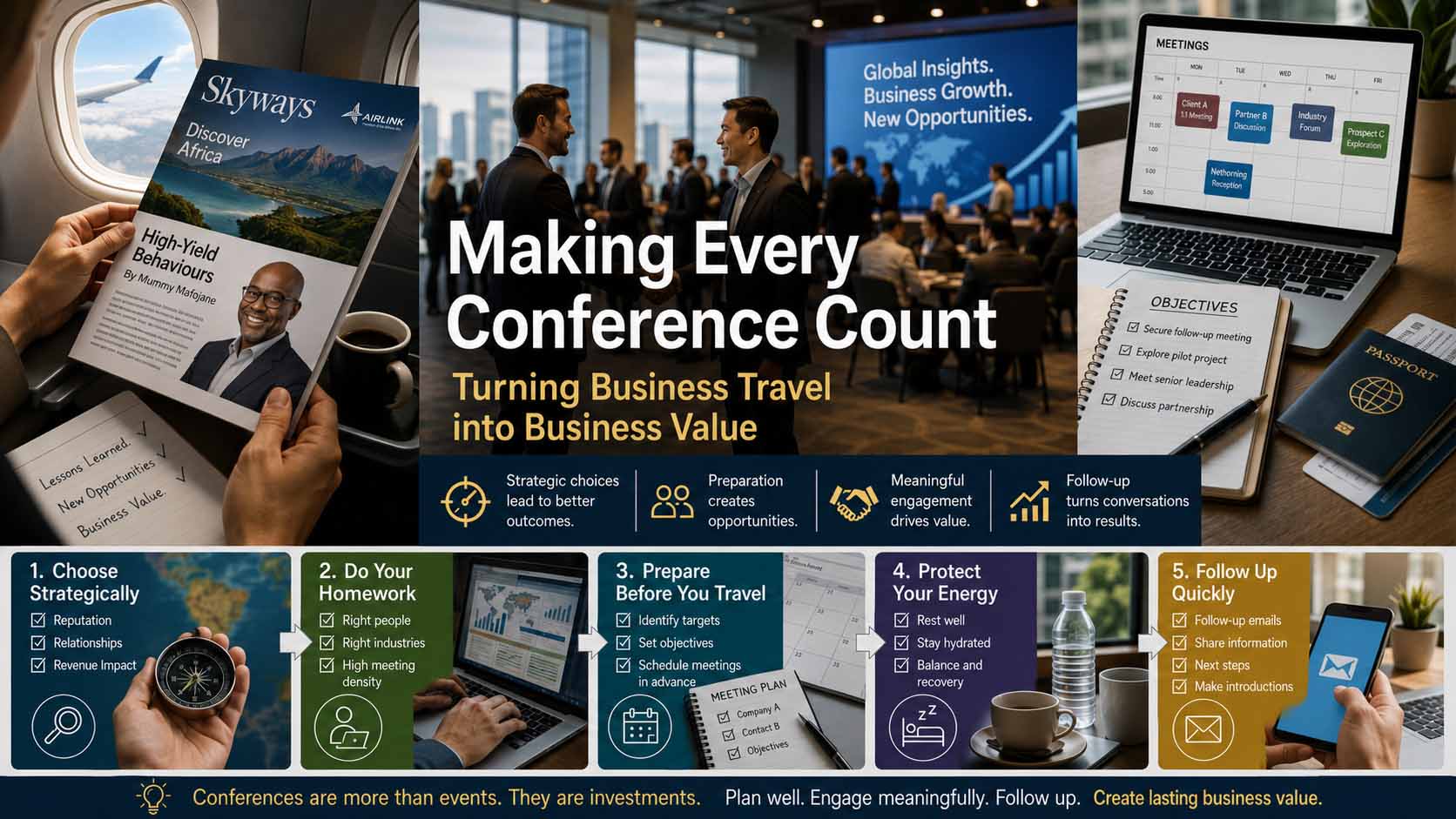
Therefore, I would like to share some of the ideas from the article because they are relevant to anyone who travels for business, attends conferences, or seeks to build stronger professional networks.
The article addresses a time when corporate travel budgets are expanding, while the pressure to demonstrate a return on investment has never been greater. Conferences, industry forums, and networking events are often among the largest travel-related expenses for organizations. Yet, too many professionals still approach these events simply as networking opportunities rather than as strategic business investments.
The reality is simple: the best conferences create value that cannot be replicated from behind a desk. They accelerate deals, strengthen relationships, provide market intelligence, and generate ideas that can drive business growth long after the event has ended. The difference between success and wasted expenditure lies in preparation, execution, and follow-up.
Choosing Events Strategically
Not every conference deserves a place on your calendar. Before registering, ask yourself three critical questions:
- Will attending strengthen my professional or company reputation?
- Will I have opportunities to build or deepen valuable relationships?
- Can the event influence revenue generation or accelerate business opportunities?
If the answer is "yes" to at least two of these questions, the event may be worth considering. If not, your time and budget may be better invested elsewhere.
Successful professionals treat conference selection with the same discipline they apply when choosing key customers or strategic projects. Quality always outweighs quantity.
Do Your Homework
A conference is only valuable if the right people attend. Before committing, research the attendee profile and determine whether decision-makers from your target industries will be present.
Ask organizers about:
- Industry representation
- Seniority levels of attendees
- Geographic coverage
- Networking opportunities
- Meeting scheduling capabilities
One of the strongest indicators of conference ROI is meeting density. Events that facilitate one-on-one meetings often deliver more business value than those focused solely on presentations.
Prepare Before You Travel
Many professionals underestimate the amount of work required before a conference even begins. In reality, the most productive attendees start planning weeks in advance.
Identify:
- Companies you want to meet
- Individuals you want to engage with
- Specific objectives for each meeting
Success should be clearly defined. It might mean securing a follow-up meeting, exploring a pilot project, obtaining an introduction to senior management, or discussing a partnership opportunity.
Two weeks before departure, begin scheduling meetings. Aim to fill approximately 60–70% of your calendar with pre-arranged conversations while leaving room for unexpected opportunities and spontaneous interactions.
Protect Your Energy
Business performance is closely linked to physical well-being.
Long flights, demanding schedules, and constant networking can quickly become exhausting. To perform at your best:
- Book accommodation near the venue
- Arrive well-rested
- Stay hydrated
- Schedule recovery time between meetings
Being alert and focused often has a greater impact on conference success than attending every session on the agenda.
Follow Up Quickly
The conference is not over when the closing session ends. In fact, the most important work often begins afterward.
Within 72 hours:
- Send personalized follow-up emails
- Share the relevant information promised during discussions
- Schedule next-step meetings
- Introduce contacts to colleagues where appropriate
Speed matters. Prompt follow-up demonstrates professionalism and keeps momentum alive while conversations are still fresh.
Conferences, when approached strategically, become powerful tools for business development, relationship building, market intelligence, and professional growth.
The most successful attendees are not those who attend the greatest number of events. Rather, they are those who carefully select the right events, prepare thoroughly, engage purposefully, and follow up consistently.
When done well, conferences cease to be mere line items in a travel budget and instead become catalysts for stronger relationships, better insights, and accelerated business results.
Mr. Mafojane's recommendations demonstrate that even conferences outside one's immediate area of focus can become productive by encouraging participants to look at the bigger picture and build structured systems for business development.
References | Notes
Disclaimer: The information provided in this article is for general informational purposes only and may vary depending on local regulations and operational conditions. Please contact MOL or relevant authorities for case-specific guidance.