
The rerouting of global shipping around the Cape of Good Hope is reshaping bunkering patterns across the region — and Mauritius is emerging as one of the clearest beneficiaries. As security risks in the Red Sea and wider Middle East continue to disrupt traditional trade lanes, more vessels are turning to southern routes around Africa. That shift is creating new demand for fuel, port services and logistical support at key stopover points in the Indian Ocean.
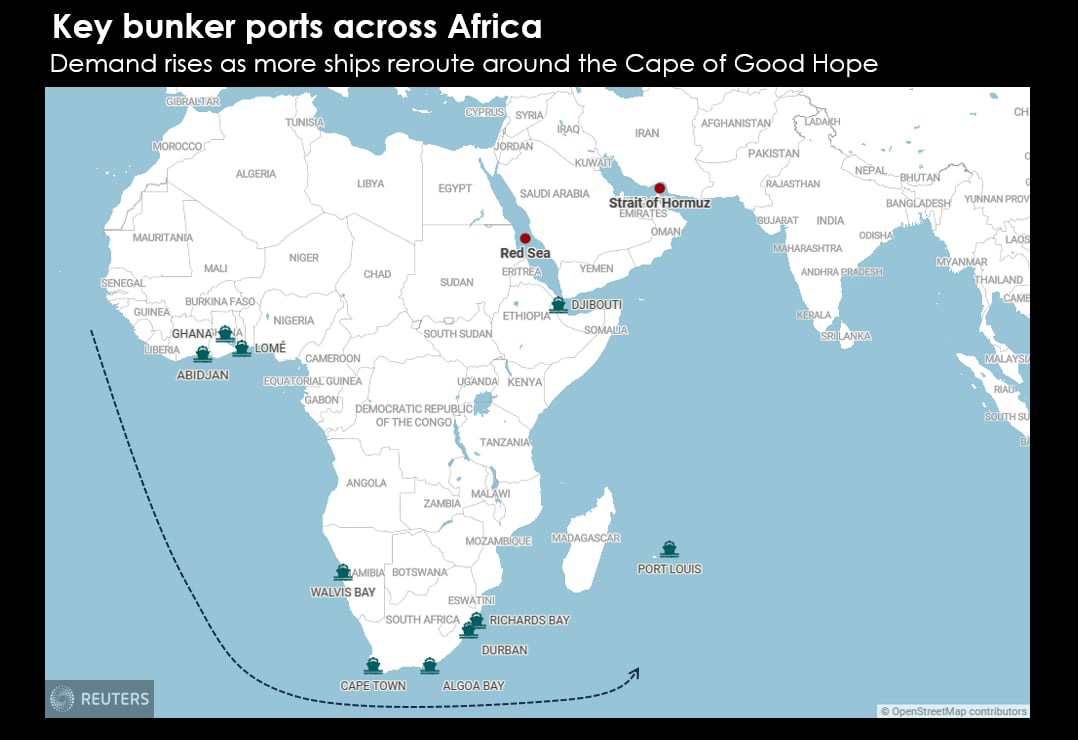
Data from the International Monetary Fund’s Port Watch platform shows just how significant this shift has become. Commercial vessel traffic around the Cape of Good Hope more than tripled over the past three years, with an average of 20 vessels per day between 1 March and 24 April 2026, compared with 6 during the same period in 2023.
Port Louis has already felt the impact. According to industry reporting, bunker volumes in Mauritius doubled from about 500,000 tonnes in 2023 to about 1 million tonnes in 2024 as Red Sea-related diversions gathered pace. More recently, following the outbreak of the Iran war in February 2026, bunker calls at Port Louis rose to 294 vessels in March — up 42% from the previous month — with fuel loaded reaching 109,708 tonnes.
These figures remind of us Mauritius’s strategic position and rich history as a key maritime hub. Long known as the “Star and Key of the Indian Ocean”, the island sits at a natural crossroads linking Europe, Africa and Asia. In periods of disruption, geography matters — and Port Louis is once again showing why it remains relevant to global shipping.
Port Louis also benefits from a competitive and diversified bunker market. Global suppliers such as Total, Trafigura, Indian Oil, Vivo Energy and Engen operate there, ensuring that major conventional fuel grades — including VLSFO, HSFO and MGO — are readily available.
The market includes international players with dedicated barges as well as local suppliers, helping to support reliability, supply flexibility and quality control in line with modern marine fuel standards.
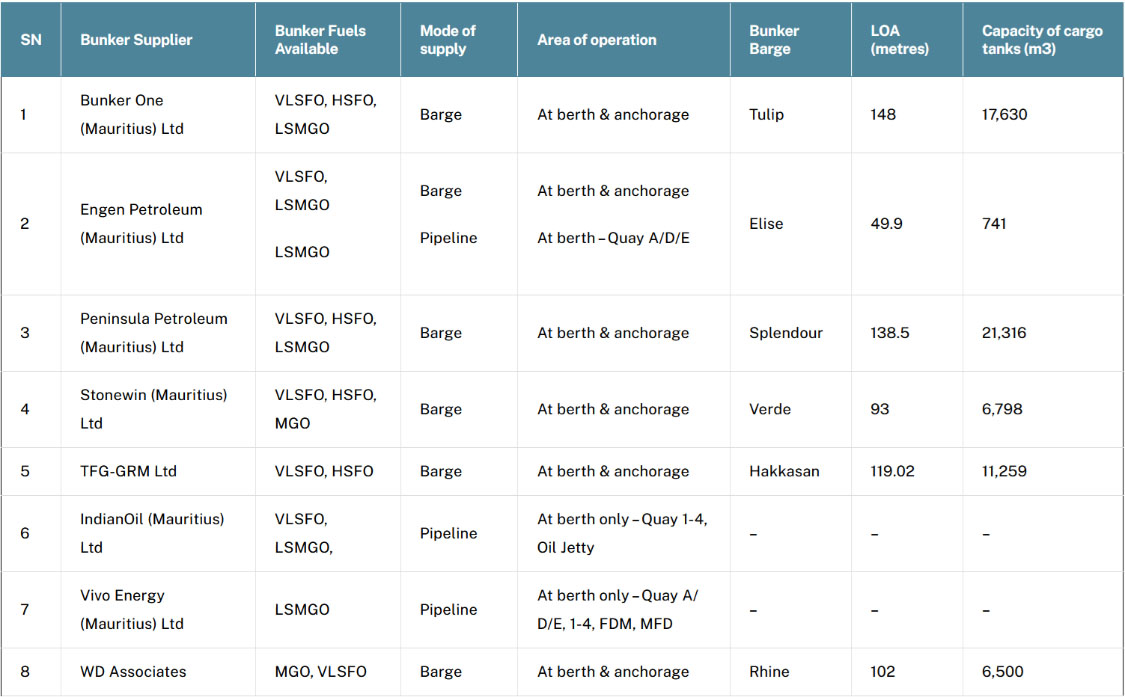
The result is a port that has become not just a convenient stop, but an increasingly credible regional bunkering option for vessels transiting the Cape route.
Public policy has also played a role. The Mauritius Ports Authority has supported the sector through incentives and infrastructure planning, while the wider port modernisation agenda continues to strengthen Port Louis’s position as one of the most strategic ports in the southwest Indian Ocean.
With deep-water access, multiple supply options, port incentives and efficient agency services, Port Louis has positioned itself as an efficient and increasingly competitive pit stop for ships operating on longer and more fuel-intensive voyages around southern Africa.
Major shipping lines such as Maersk and MSC are increasingly using Port Louis for fuel stops and crew changes, while MOL Group’s chemical tanker fleet, which due to their size often lack the bunker tank capacity to make longer voyages between Europe/ Americas and Asia (or in reverse) also make regular calls to Port Louis for bunker.
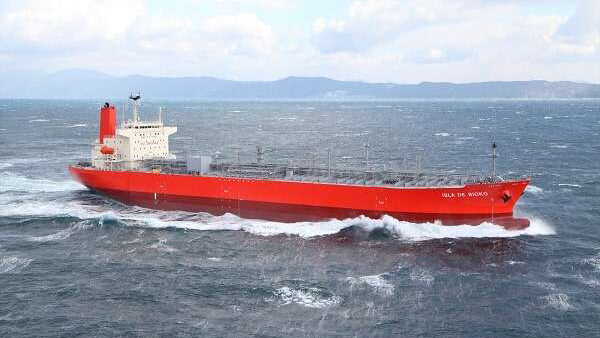
A combination of geography, service availability and market depth is helping Mauritius capture a larger share of regional bunkering demand.
The key question now is whether this surge will prove temporary or whether Mauritius can convert it into a more durable competitive advantage. Some traffic may return to traditional routes if security conditions in the Red Sea and Middle East improve. But the current moment gives policymakers, port authorities and bunker suppliers an opportunity to think more strategically about how Port Louis can strengthen its long-term role as a regional marine fuels hub.
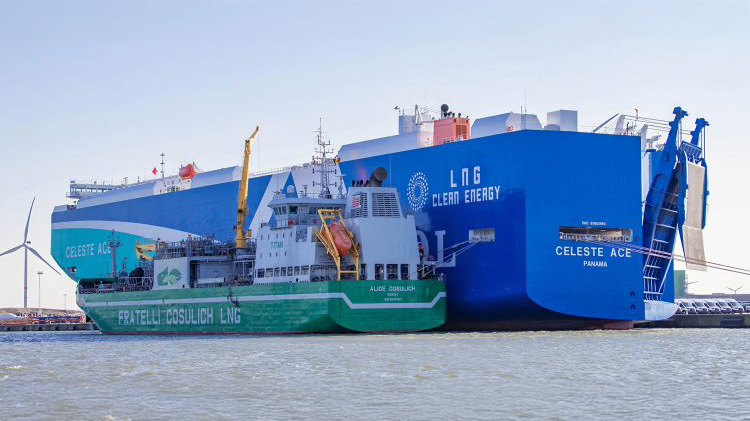
One of the most important next steps would be to look beyond conventional fuels and begin preparing for cleaner marine energy options, starting with LNG. While the long-term fuel mix for shipping will remain diverse, LNG is already established globally as a transition fuel with mature handling protocols, lower local air pollutant emissions than heavy fuel oil, and growing adoption across parts of the maritime sector. Today, however, no port in the Cape of Good Hope corridor has yet established itself as a clear LNG bunkering leader.
If Mauritius proceeds with its broader LNG import ambitions for the power sector, Port Louis could eventually add LNG bunkering to its value proposition and differentiate itself further from competing ports in the region. That would not only deepen the port’s relevance in today’s disrupted market but also help position Mauritius for the next phase of maritime decarbonisation. In that sense, the current bunkering boom is more than a short-term windfall — it may be the opening for Mauritius to reclaim a lasting strategic role at the crossroads of Indian Ocean trade.
References | Notes
Disclaimer: The information provided in this article is for general informational purposes only and may vary depending on local regulations and operational conditions. Please contact MOL or relevant authorities for case-specific guidance.